Introduction
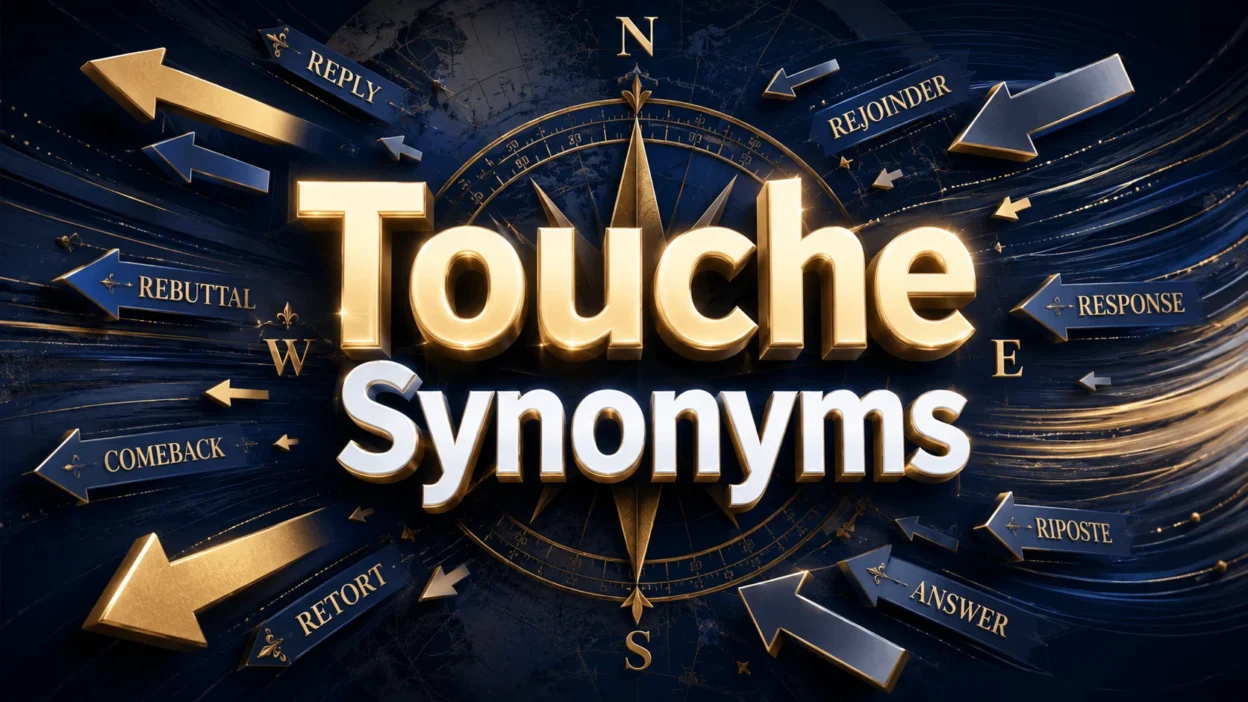
Have you ever been in a conversation where someone makes such a good point that you just have to admit they’re right? That’s exactly when you’d use the word “touche.” This elegant French borrowing has become a staple of English conversation, particularly in debates, arguments, and witty exchanges .
The word “touche” originally comes from the world of fencing, where it means “touched” or “hit” . When a fencer successfully lands a blow, they acknowledge it with this term. Over time, the word made its way into everyday English, where we now use it to show appreciation for someone’s clever remark or valid point .
For students, writers, and ESL learners, mastering synonyms for “touche” can dramatically improve your conversational skills and writing. Whether you’re crafting dialogue, participating in academic debates, or simply want to sound more natural in English, having a rich vocabulary of acknowledgment phrases will serve you well. This article explores over 30 powerful synonyms and alternatives that will help you respond gracefully when someone makes an excellent point.
Understanding “Touche”: Meaning and Usage
Before diving into synonyms, let’s clarify what “touche” actually means. In modern English, “touche” (pronounced too-SHAY) is an interjection used to:
- Acknowledge a clever remark in a conversation or debate
- Admit that someone has made a valid point against your argument
- Show respect for someone’s wit or intelligence
- Accept defeat gracefully in a verbal exchange
The beauty of “touche” lies in its versatility. You can use it in formal debates, casual conversations, or even in writing to convey that you’ve been bested by a sharp response. It carries a tone of respect and sportsmanship that makes it particularly valuable in professional and academic settings .
30+ Powerful Synonyms for Touche
1. Point Taken
Meaning: Acknowledging that someone has made a valid observation or argument.
Example: “You’re right, I did say that earlier. Point taken.”
Best usage context: Casual conversations and professional discussions where you want to acknowledge a valid counterargument without conceding entirely.
2. Fair Point
Meaning: Recognizing that someone has made a reasonable and justifiable argument.
Example: “That’s a fair point about the budget constraints.”
Best usage context: Professional settings, meetings, and academic discussions where fairness and reasonableness are valued.
3. Well Said
Meaning: Complimenting someone on articulating their point effectively.
Example: “Well said! You’ve perfectly captured the essence of the problem.”
Best usage context: Public speaking, presentations, and formal discussions where eloquence is appreciated.
4. Touché (Alternative Variations)
Meaning: The original French acknowledgment of a successful hit or clever point .
Example: “You’ve got me there. Touché.”
Best usage context: Conversations where you want to maintain the elegance and sophistication of the original French term.
5. You Got Me There
Meaning: Admitting that someone has found a flaw in your argument or bested you with their point.
Example: “I didn’t think of that. You got me there.”
Best usage context: Friendly debates, casual conversations, and situations where you want to show humility.
6. Good Comeback
Meaning: Praising someone’s quick and effective response to your statement.
Example: “Good comeback! I didn’t see that one coming.”
Best usage context: Informal conversations, friendly rivalries, and witty exchanges.
7. I See Your Point
Meaning: Demonstrating understanding of someone’s perspective or argument.
Example: “I see your point about the deadline being unrealistic.”
Best usage context: Professional discussions, negotiations, and problem-solving conversations.
8. You Have a Point
Meaning: Acknowledging the validity of someone’s argument.
Example: “You have a point about the marketing strategy needing revision.”
Best usage context: Team meetings, collaborative discussions, and feedback sessions.
9. Fair Enough
Meaning: Accepting someone’s explanation or argument as reasonable.
Example: “Fair enough, I can’t argue with that logic.”
Best usage context: Casual conversations and situations where you want to show openness to others’ ideas.
10. Clever Point
Meaning: Complimenting someone on making an intelligent or insightful observation.
Example: “That’s a clever point about customer behavior patterns.”
Best usage context: Academic discussions, professional presentations, and intellectual conversations.
11. Noted
Meaning: Indicating that you’ve registered and acknowledged someone’s point.
Example: “Noted. I’ll take that into consideration for the next draft.”
Best usage context: Professional settings, meetings, and writing contexts.
12. Sharp Observation
Meaning: Praising someone’s astute and perceptive comment.
Example: “That’s a sharp observation about the data trends.”
Best usage context: Analytical discussions, research contexts, and professional analysis.
13. Good One
Meaning: A casual way to acknowledge a good joke or clever remark.
Example: “Good one! I didn’t see that pun coming.”
Best usage context: Informal conversations, friendly banter, and social situations.
14. Nice Retort
Meaning: Complimenting someone on a quick, witty, or clever reply.
Example: “Nice retort! That was beautifully timed.”
Best usage context: Formal debates, witty exchanges, and situations involving sharp intellectual banter.
15. You Win This Round
Meaning: Acknowledging defeat in a lighthearted or playful way.
Example: “You win this round. I can’t match that argument.”
Best usage context: Friendly debates, playful arguments, and social situations where competition is lighthearted.
16. Solid Point
Meaning: Recognizing that someone has made a strong, well-supported argument.
Example: “That’s a solid point about the project timeline.”
Best usage context: Professional discussions, academic debates, and serious conversations.
17. Valid Argument
Meaning: Acknowledging that someone’s reasoning is logical and sound.
Example: “You’ve made a valid argument for extending the deadline.”
Best usage context: Formal debates, legal discussions, and professional negotiations.
18. Good Answer
Meaning: Acknowledging that someone has responded well to a question or challenge.
Example: “Good answer! That was exactly the right solution.”
Best usage context: Interviews, Q&A sessions, and educational settings.
19. That’s a Good Point
Meaning: A simple, direct way to acknowledge someone’s observation.
Example: “That’s a good point about the competition’s strategy.”
Best usage context: Meetings, brainstorming sessions, and collaborative discussions.
20. Well Played
Meaning: Recognizing someone’s skill or cleverness in making their point.
Example: “Well played! I didn’t expect that approach.”
Best usage context: Games, competitions, and situations where strategy is involved.
21. Great Insight
Meaning: Complimenting someone on providing a valuable or revealing perspective.
Example: “That’s a great insight about consumer motivation.”
Best usage context: Research discussions, analytical contexts, and professional presentations.
22. I Concede
Meaning: Formally admitting defeat or acknowledging that the other person is right.
Example: “I concede. You’ve presented the stronger argument.”
Best usage context: Formal debates, academic discussions, and serious professional conversations.
23. Fair Comment
Meaning: Acknowledging that someone’s observation is reasonable and justified.
Example: “That’s a fair comment about the team’s performance.”
Best usage context: Professional feedback, performance reviews, and constructive conversations.
24. Brilliant Point
Meaning: Highly praising someone for making an exceptionally clever observation.
Example: “That’s a brilliant point about the economic implications.”
Best usage context: Academic discussions, intellectual conversations, and situations where exceptional insight is shown.
25. You’re Right
Meaning: A direct acknowledgment that someone is correct.
Example: “You’re right about the deadline being too tight.”
Best usage context: All types of conversations, from casual to professional.
26. I Take Your Point
Meaning: Acknowledging that you understand and accept someone’s argument.
Example: “I take your point about the need for more resources.”
Best usage context: Professional discussions, negotiations, and collaborative problem-solving.
27. Wise Observation
Meaning: Complimenting someone on showing wisdom and insight in their comment.
Example: “That’s a wise observation about human behavior.”
Best usage context: Philosophical discussions, mentoring conversations, and serious intellectual exchanges.
28. Point Made
Meaning: Acknowledging that someone has successfully communicated their argument.
Example: “Point made. I’ll reconsider my position.”
Best usage context: Brief, direct conversations where you want to show you’ve been persuaded.
29. Good Retort
Meaning: Praising someone for a quick, clever reply.
Example: “Good retort! You always have the perfect response.”
Best usage context: Witty conversations, friendly debates, and situations requiring quick thinking.
30. That Settles It
Meaning: Acknowledging that someone’s point has ended the argument convincingly.
Example: “That settles it. Your solution is clearly better.”
Best usage context: Decision-making situations, debates, and professional discussions.
31. You’ve Convinced Me
Meaning: Admitting that someone has successfully persuaded you.
Example: “You’ve convinced me. Let’s go with your approach.”
Best usage context: Persuasion contexts, sales conversations, and decision-making.
32. Solid Retort
Meaning: Recognizing a strong, well-constructed reply.
Example: “That’s a solid retort. I can’t find fault with your logic.”
Best usage context: Formal debates, legal arguments, and serious intellectual discussions.
Comparison Table: When to Use Different Synonyms
| Synonym | Formality Level | Best Situations | Tone |
|---|---|---|---|
| Point Taken | Casual-Professional | Meetings, conversations | Respectful |
| Fair Point | Professional | Discussions, debates | Reasonable |
| Touché | Semi-formal | Intellectual conversations | Sophisticated |
| You Got Me There | Casual | Friendly debates | Humble |
| Good Comeback | Casual | Social situations | Playful |
| I See Your Point | Professional | Negotiations | Understanding |
| Clever Point | Semi-formal | Academic discussions | Complimentary |
| Noted | Formal | Professional settings | Businesslike |
| You Win This Round | Casual | Playful arguments | Lighthearted |
| Valid Argument | Formal | Legal/academic debates | Serious |
How to Choose the Right Synonym
Group 1: Formal and Professional Contexts
When you’re in a business meeting, academic debate, or professional discussion, choose these synonyms:
- Valid Argument
- I See Your Point
- Noted
- You Have a Point
- Fair Point
Group 2: Casual and Social Situations
For everyday conversations, choose these relaxed options:
- Good One
- You Got Me There
- You Win This Round
- Good Comeback
- Fair Enough
Group 3: Witty and Intellectual Exchanges
When you’re engaged in clever banter or intellectual discussions:
- Touché
- Clever Point
- Sharp Observation
- Good Retort
- Well Played
Group 4: Acknowledging Defeat Gracefully
When you want to concede gracefully:
- I Concede
- You’ve Convinced Me
- That Settles It
- You’re Right
- Point Taken
Conclusion
Mastering synonyms for “touche” is an excellent way to elevate your English vocabulary and communication skills . Whether you’re a student participating in debates, a writer crafting dialogue, or an ESL learner wanting to sound more natural, having a diverse range of acknowledgment phrases at your disposal is invaluable .
The key takeaway is that choosing the right synonym depends on your context and audience. In professional settings, “fair point” or “valid argument” might serve you better than “good one.” In casual conversations, “you got me there” or “good comeback” will sound more natural.
Remember, the goal of using these synonyms isn’t just to sound smart—it’s to show respect for others’ ideas, demonstrate active listening, and maintain positive, constructive communication . By varying your responses and choosing the most appropriate phrase for each situation, you’ll become a more effective and engaging communicator.
So next time someone makes a brilliant point, don’t just say “touche”—pick from this rich vocabulary of synonyms and respond with style, sophistication, and genuine appreciation!

Amber Amy is a passionate writer at SynonymLot, dedicated to helping readers discover better words, expand their vocabulary, and improve their writing through clear, accurate, and easy-to-understand synonym guides.