30 Best Alternatives, Usage Guide
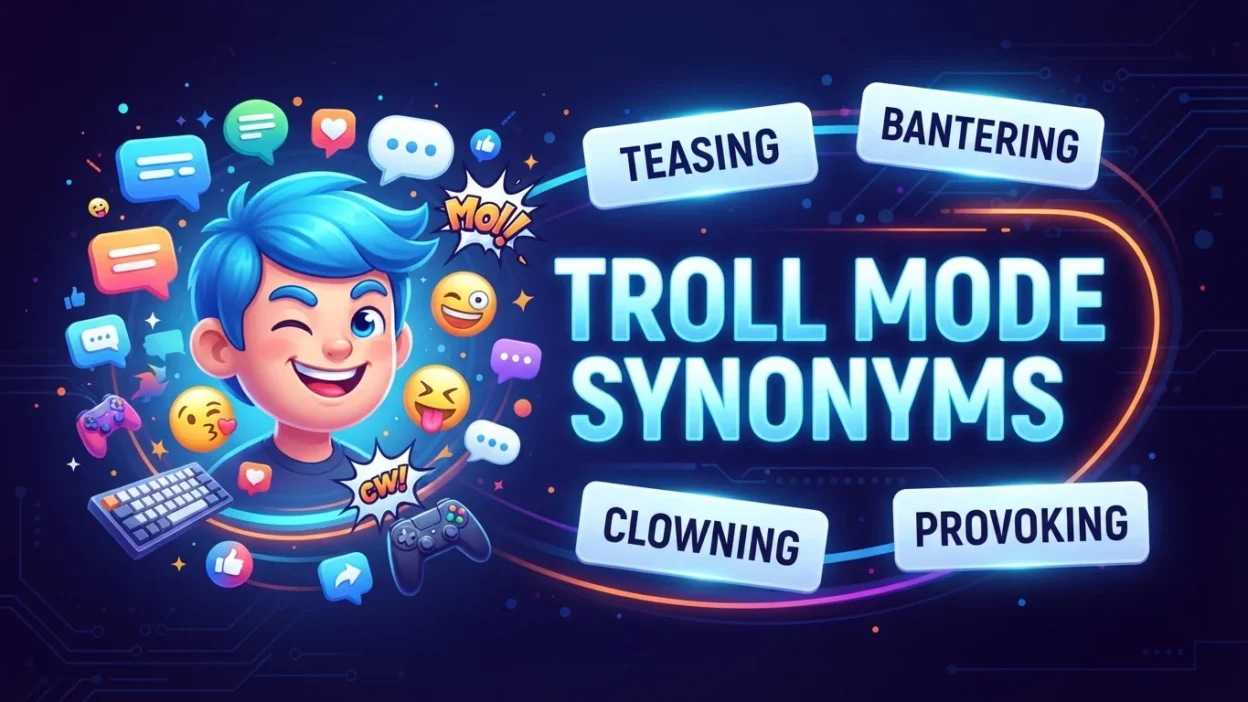
Have you ever heard someone say they’re “in troll mode”? This popular internet phrase describes someone who is deliberately teasing, provoking, or joking around—often just to get funny reactions from others. if on social media, gaming platforms, or casual conversations, understanding troll mode synonyms helps you communicate more naturally and choose the right word for different situations.
Learning alternative words for “troll mode” is especially useful for students, ESL learners, writers, and content creators. Some synonyms sound playful, while others describe more serious or negative behavior. Knowing the difference helps you write clearly and avoid misunderstandings.
In this guide, you’ll discover the meaning of troll mode, 30 useful synonyms with simple definitions, example sentences, usage tips, a comparison table, and advice on choosing the best synonym for your context.
What Does “Troll Mode” Mean?
Troll mode is an informal expression describing a person who intentionally says or does things to provoke, annoy, confuse, or entertain others.
Sometimes trolling is harmless fun between friends. Other times, it can become rude or offensive, especially online.
Tone
- Informal
- Internet slang
- Humorous or sarcastic
- Sometimes negative
Example
Jake went into troll mode during the group chat and kept sending funny fake announcements.
30 Troll Mode Synonyms
1. Teasing
Meaning: Playfully making fun of someone.
Example: Emma kept teasing her brother during dinner.
Best Usage: Friendly conversations.
2. Provoking
Meaning: Trying to get an emotional reaction.
Example: He enjoys provoking people online.
Best Usage: Serious or online discussions.
3. Pranking
Meaning: Playing tricks for fun.
Example: They spent the afternoon pranking their classmates.
Best Usage: Lighthearted situations.
4. Mocking
Meaning: Making fun of someone in an unkind way.
Example: The bully kept mocking the new student.
Best Usage: Negative situations.
5. Ridiculing
Meaning: Making someone look foolish.
Example: The article ridiculed the politician’s mistake.
Best Usage: Formal writing.
6. Joking Around
Meaning: Behaving playfully.
Example: Don’t worry—he’s just joking around.
Best Usage: Everyday conversation.
7. Fooling Around
Meaning: Acting silly instead of being serious.
Example: Stop fooling around and finish your homework.
Best Usage: Informal speech.
8. Messing With Someone
Meaning: Playfully bothering someone.
Example: I was only messing with you.
Best Usage: Casual conversations.
9. Needling
Meaning: Repeatedly annoying someone.
Example: She kept needling her brother about losing the game.
Best Usage: Mild criticism.
10. Baiting
Meaning: Trying to lure someone into reacting.
Example: The comments were clearly baiting readers.
Best Usage: Social media.
11. Taunting
Meaning: Mocking to upset someone.
Example: The crowd taunted the opposing team.
Best Usage: Competitive settings.
12. Roasting
Meaning: Humorously criticizing someone.
Example: Friends were roasting each other at the party.
Best Usage: Comedy.
13. Bantering
Meaning: Friendly teasing conversation.
Example: The coworkers enjoyed playful bantering.
Best Usage: Friendly relationships.
14. Heckling
Meaning: Interrupting with critical comments.
Example: The comedian handled the heckling well.
Best Usage: Live events.
15. Poking Fun
Meaning: Gently making jokes about someone.
Example: We were just poking fun at his old car.
Best Usage: Friendly humor.
16. Agitating
Meaning: Making someone irritated.
Example: Constant messages were agitating everyone.
Best Usage: Serious situations.
17. Annoying
Meaning: Causing irritation.
Example: His constant humming was annoying.
Best Usage: General English.
18. Irritating
Meaning: Slightly upsetting or bothersome.
Example: The loud noise was irritating.
Best Usage: Everyday writing.
19. Harassing
Meaning: Repeatedly bothering someone unfairly.
Example: Online harassing is unacceptable.
Best Usage: Serious discussions.
20. Stirring the Pot
Meaning: Creating unnecessary conflict.
Example: He’s always stirring the pot at work.
Best Usage: Idiomatic English.
21. Playing Around
Meaning: Acting playfully.
Example: They were just playing around.
Best Usage: Informal settings.
22. Mischief-Making
Meaning: Causing harmless trouble.
Example: The children enjoyed harmless mischief-making.
Best Usage: Friendly situations.
23. Acting Silly
Meaning: Behaving in a funny way.
Example: Stop acting silly during class.
Best Usage: Everyday English.
24. Clowning
Meaning: Acting like a comedian.
Example: He was clowning to make everyone laugh.
Best Usage: Informal speech.
25. Ribbing
Meaning: Friendly teasing.
Example: His teammates gave him a little ribbing.
Best Usage: Sports and friendships.
26. Winding Someone Up
Meaning: Deliberately annoying someone for fun.
Example: She’s only winding you up.
Best Usage: British English.
27. Playing Mind Games
Meaning: Trying to confuse someone psychologically.
Example: He enjoys playing mind games.
Best Usage: Serious contexts.
28. Egging On
Meaning: Encouraging reactions or actions.
Example: The crowd kept egging him on.
Best Usage: Informal conversations.
29. Being Sarcastic
Meaning: Using irony to tease or criticize.
Example: She was being sarcastic again.
Best Usage: Conversations and writing.
30. Acting Like a Joker
Meaning: Constantly making jokes.
Example: He’s always acting like a joker.
Best Usage: Friendly situations.
Troll Mode Synonyms Comparison Table
| Synonym | Tone | Best Used For |
|---|---|---|
| Teasing | Friendly | Friends |
| Bantering | Friendly | Casual chats |
| Roasting | Funny | Comedy |
| Pranking | Playful | Entertainment |
| Clowning | Funny | Informal speech |
| Provoking | Neutral | Discussions |
| Baiting | Negative | Online debates |
| Mocking | Negative | Criticism |
| Ridiculing | Formal | Writing |
| Taunting | Negative | Sports or arguments |
| Harassing | Serious | Legal or safety topics |
| Stirring the Pot | Informal | Conflict situations |
| Needling | Mild | Repeated teasing |
| Poking Fun | Friendly | Humor |
| Winding Someone Up | Informal | British English |
How to Choose the Right Troll Mode Synonym
Choosing the best synonym depends on your purpose and tone.
For Friendly Humor
Use:
- Teasing
- Bantering
- Ribbing
- Poking Fun
- Playing Around
- Clowning
These words describe harmless fun among friends.
For Internet Culture
Use:
- Troll Mode
- Baiting
- Provoking
- Roasting
- Messing With Someone
These fit social media, gaming, and online conversations.
For Serious or Negative Situations
Use:
- Harassing
- Mocking
- Ridiculing
- Taunting
- Agitating
These words describe behavior that may be offensive or harmful.
For Creative Writing
Use a variety of synonyms based on your character’s personality. Friendly characters may “banter,” while antagonists may “taunt” or “provoke.”
Common Mistakes to Avoid
- Don’t use harassing when the situation is only playful.
- Don’t confuse roasting with bullying; roasting is usually humorous and mutual.
- Avoid using troll mode in formal business or academic writing.
- Choose a synonym that matches the seriousness of the situation.
Frequently Asked Questions
Is “troll mode” a real dictionary term?
Not usually. It is internet slang commonly used in online communities.
Is trolling always negative?
No. Some trolling is playful and harmless, while other forms are intended to upset or insult people.
What’s the friendliest synonym for troll mode?
Teasing, bantering, and ribbing are the most positive alternatives.
What’s the strongest negative synonym?
Harassing is the strongest because it describes repeated harmful behavior.
Conclusion
Understanding troll mode synonyms helps you communicate more naturally in both online and offline conversations. Some alternatives, like teasing, bantering, and clowning, are playful and friendly, while others, such as mocking, baiting, and harassing, describe more serious or harmful behavior. By choosing the right synonym for the situation, you can write with greater accuracy, improve your vocabulary, and express yourself more effectively in everyday English.

Alexander Eric is the Administrator of SynonymLot, dedicated to providing accurate synonyms, vocabulary resources, and language tools. He enjoys helping readers improve writing, communication, and English word knowledge daily.