Ever felt frustrated trying to describe a character who isn’t the star of the story? You know, those essential friends, quirky neighbors, or mysterious strangers that make a narrative world feel real. Finding the perfect side character synonyms can be tricky because these roles are so varied. Are they a loyal supporter, a minor obstacle, or just part of the scenery? A bland word can make your writing feel flat.
For students and ESL learners, building a strong vocabulary means knowing not just one word for a concept, but understanding the subtle shades of meaning between many similar words. This is where a good thesaurus becomes your best friend. This article is designed to help you master the vocabulary of supporting characters. We’ll explore a wide range of synonyms for “side character,” explain how to choose the right one, and even touch on a fun, related word: “demure.” Let’s dive into the wonderful world of words!
What Does “Side Character” Mean?
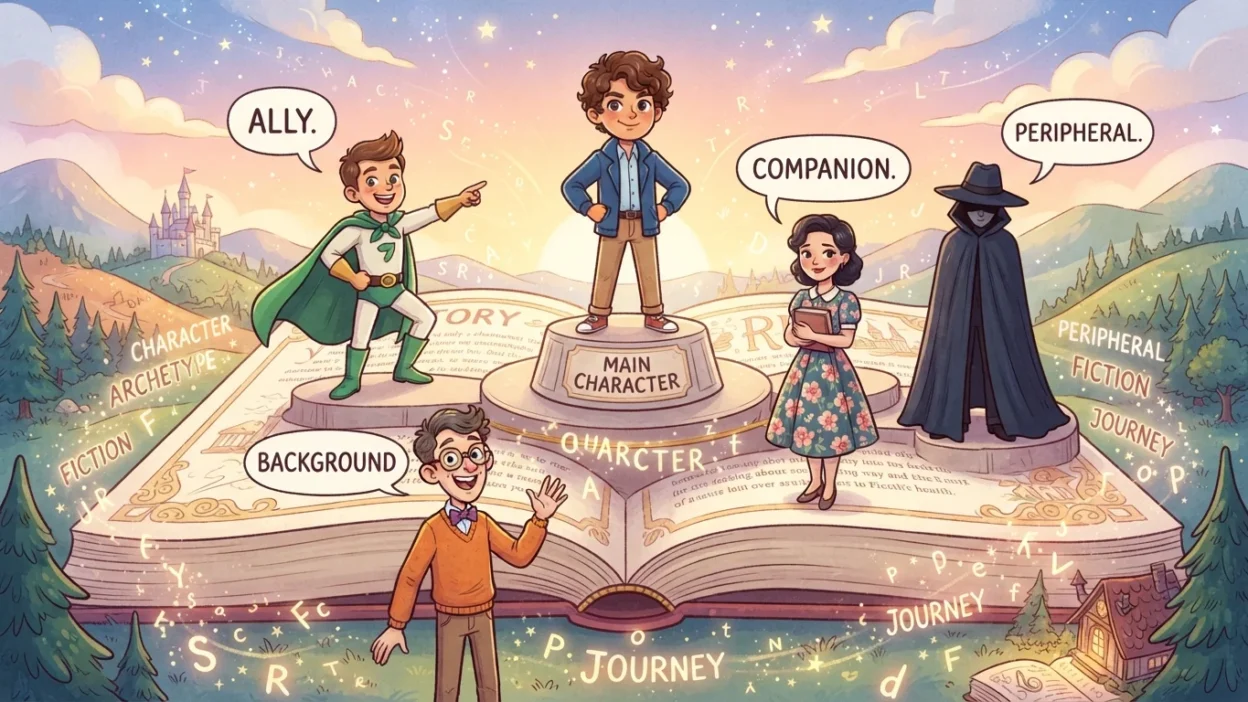
Simply put, a side character is any person in a story who is not the main character or protagonist. They play a secondary role. While the story doesn’t revolve around them, they are crucial for several reasons:
- Supporting the Protagonist: They help the main character on their journey, offer advice, or provide emotional support.
- Creating Conflict: They can be antagonists or create obstacles that the hero must overcome.
- Adding Depth: They help build the world of the story, making it feel more realistic and complete.
Sometimes, a side character is just there for a moment, while others have their own mini-arcs. The word you choose depends on their specific function and importance. Think of it like a movie: the lead actor is the star, but the film wouldn’t be the same without the talented cast of supporting actors.
30+ Side Character Synonyms You Need to Know
Below is a comprehensive list of synonyms for “side character,” categorized to help you find the perfect word. Each entry includes a simple meaning, an example sentence, and a note on the best usage context.
General & Common Terms
These are the most frequently used and versatile alternatives.
- Supporting Character: A character who provides support and helps the main character.
- Example: “The movie was great, but my favorite was the quirky supporting character who ran the coffee shop.”
- Best for: Any story where the character has a clear but secondary role.
- Minor Character: A character with a small part and limited screen time.
- Example: “Even the minor characters in the novel were described with incredible detail.”
- Best for: Characters who appear briefly.
- Secondary Character: A character who is second in importance to the main characters.
- Example: “The secondary characters often had more interesting backstories than the hero.”
- Best for: Characters who are significant but not the protagonist.
- Background Character: A character who is part of the setting and doesn’t interact much with the plot.
- Example: “The background characters in the street scene were all wearing period costumes.”
- Best for: Characters who are part of the scenery.
- Non-Protagonist: A simple, clear way to say “not the main character.”
- Example: “The story is told from the perspective of a non-protagonist observer.”
- Best for: Academic or analytical writing.
- Auxiliary Character: A character who provides supplementary or additional support.
- Example: “The auxiliary characters helped build the world of the fantasy kingdom.”
- Best for: Formal or descriptive writing.
Characters with Supporting Roles
These words highlight a character’s role in helping the protagonist.
- Ally: A character who is on the protagonist’s side and fights for the same cause.
- Example: “In the final battle, the hero’s allies arrived just in time.”
- Best for: Stories with a clear “good vs. evil” conflict.
- Sidekick: A close companion who accompanies the main character, often with a humorous or loyal role.
- Example: “Batman’s loyal sidekick, Robin, is a classic example of the trope.”
- Best for: Adventure, action, and buddy-comedy stories.
- Companion: A character who travels or spends time with the protagonist.
- Example: “The Doctor’s companions often play a crucial role in helping him save the day.”
- Best for: Stories involving a journey or quest.
- Partner: A character who shares the adventure or mission as an equal to the protagonist.
- Example: “Her partner in the detective agency was skeptical of the new case.”
- Best for: Detective stories, police procedurals, and professional settings.
Characters as Minor Obstacles or Plot Points
These words describe characters whose role is more about their function than their personality.
- Incidental Character: A character who appears by chance and has little to no importance.
- Example: “The taxi driver was just an incidental character in the first chapter.”
- Best for: Characters who are purely functional to the plot.
- Peripheral Character: A character who exists on the margins of the story.
- Example: “The peripheral characters’ gossip helped fill in the backstory.”
- Best for: Characters who are only vaguely connected to the main plot.
- Non-Essential Character: A character whose removal would not significantly change the plot.
- Example: “The editor suggested removing the non-essential character to tighten the story.”
- Best for: Editing and revision notes.
- Lesser Character: A character of lower importance.
- Example: “He gained fame for his roles as lesser characters in several blockbuster films.”
- Best for: Simple, straightforward descriptions.
- Extra: An actor who appears in a nonspeaking or minor role, often in a crowd scene.
- Example: “The film used hundreds of extras for the concert scene.”
- Best for: Describing characters in film or television.
More Formal and Specific Terms
- Subordinate Character: A character who is lower in rank or position.
- Example: “The captain and his subordinate characters were stationed at the fort.”
- Best for: Military, corporate, or hierarchical settings.
- Ancillary Character: A character who provides essential support but is not the focus.
- Example: “The ancillary characters handled the logistics of the mission.”
- Best for: Formal and descriptive writing.
- Non-Principal Character: A term that simply means “not a main character.”
- Example: “The award ceremony also recognized outstanding performances by non-principal characters.”
- Best for: Industry awards and formal contexts.
What Does “Demure” Mean? (And Why Use It?)
While we’re exploring vocabulary, let’s look at a word that describes a particular type of personality: demure. This is a great example of how word choice adds nuance to your writing.
A demure person is quiet, shy, and very proper in their behavior. Think of a character who is polite, reserved, and modest, often wearing simple and elegant clothes.
The word can also mean someone who is pretending to be shy or modest in a playful way. It’s not just about being quiet; it suggests a deliberate, self-contained sense of modesty.
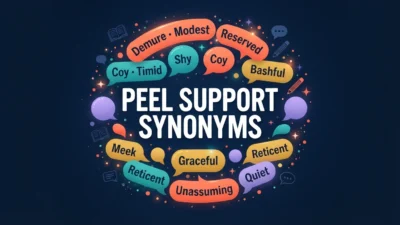
30 Synonyms of Demure
Here are 30 words that can be used as synonyms for “demure.” Each is slightly different, so choose carefully!
| Word | Meaning (Simple) | Example Sentence | Best Usage Context |
|---|---|---|---|
| 1 | Modest | Not showing off; humble. | “She was a modest woman who never bragged about her achievements.” |
| 2 | Reserved | Quiet and not showing feelings. | “He was a reserved man who kept to himself.” |
| 3 | Shy | Nervous around people; timid. | “The shy student struggled to speak in front of the class.” |
| 4 | Retiring | Shy and not wanting to be with people. | “After the party, the retiring host was glad for some peace.” |
| 5 | Bashful | Easily embarrassed; shy. | “The bashful bride blushed as the crowd cheered.” |
| 6 | Coy | Pretending to be shy or modest. | “She gave him a coy smile from across the room.” |
| 7 | Quiet | Not making much noise or talk. | “He was the quiet type, always observing rather than speaking.” |
| 8 | Reticent | Not revealing one’s thoughts. | “He was reticent about his past.” |
| 9 | Unassuming | Not seeking attention; modest. | “The unassuming hero never expected a reward.” |
| 10 | Meek | Quiet and gentle; not wanting to fight. | “The meek lamb was the perfect pet for the child.” |
| 11 | Prim | Very formal and proper. | “The prim librarian wore a cardigan and glasses.” |
| 12 | Solemn | Very serious and formal. | “Her solemn expression told us the news was bad.” |
| 13 | Sedate | Calm and unhurried. | “The sedate town had a peaceful, quiet atmosphere.” |
| 14 | Staid | Respectable and dull. | “The staid business meeting was incredibly boring.” |
| 15 | Sober | Serious and not joking. | “The judge’s sober expression commanded respect.” |
| 16 | Decorous | Behaving properly and politely. | “The guests maintained a decorous silence.” |
| 17 | Timid | Lacking confidence and courage. | “The timid mouse scurried away.” |
| 18 | Diffident | Lacking self-confidence. | “He was diffident about his chances of winning.” |
| 19 | Self-Conscious | Nervous about how one looks. | “She felt self-conscious in her new dress.” |
| 20 | Mousy | Quiet, shy, and unremarkable. | “The mousy secretary kept to the background.” |
| 21 | Shamefaced | Showing embarrassment or shame. | “The shamefaced boy apologized for his mistake.” |
| 22 | Grave | Serious and solemn (like a funeral). | “The situation was very grave.” |
| 23 | Unobtrusive | Not noticeable; blending in. | “The spy was an unobtrusive figure in the crowd.” |
| 24 | Unpretentious | Not trying to seem more important. | “The celebrity was surprisingly unpretentious.” |
| 25 | Subdued | Quiet and somewhat sad. | “A subdued atmosphere filled the room.” |
| 26 | Composed | Calm and in control. | “Despite the chaos, she remained composed.” |
| 27 | Dignified | Respectful and serious. | “The dignified old man greeted everyone politely.” |
| 28 | Formal | Correct and stiff in behavior. | “The formal dinner required dressing up.” |
| 29 | Respectable | Considered proper and correct. | “He came from a respectable family.” |
| 30 | Proper | Correct behavior for a social situation. | “It’s not proper to laugh at a funeral.” |
How to Choose the Right Synonym: A Guide
Selecting the perfect word depends on context. Here’s a simple grouping:
For Loyalty & Support
- Sidekick, Ally, Companion, Partner
For Minor Importance
- Incidental, Background, Extra, Non-Essential
For Modesty & Shyness
- Demure, Reserved, Bashful, Modest
For Seriousness & Formality
- Solemn, Sedate, Staid, Decorous
Conclusion
Learning the nuances of words is a superpower for any writer or language learner. Understanding synonyms for common terms like “side character” allows you to be more precise and interesting in your writing. Whether you’re describing a loyal sidekick, a modest demure heroine, or a peripheral figure in a crowd, the right word makes all the difference. So, next time you sit down to write, remember these side character synonyms and choose the one that best captures the role you have in mind. Keep practicing, and soon this rich vocabulary will feel completely natural.

Amber Amy is a passionate writer at SynonymLot, dedicated to helping readers discover better words, expand their vocabulary, and improve their writing through clear, accurate, and easy-to-understand synonym guides.