Introduction
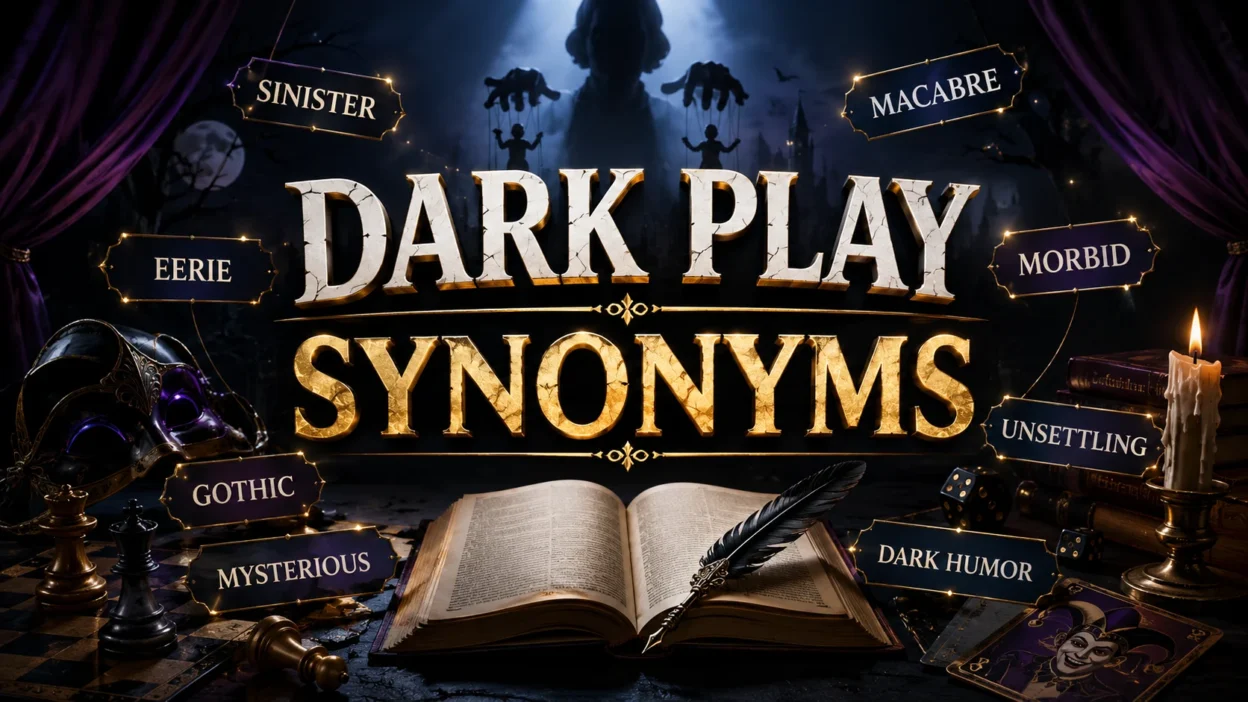
The phrase “dark play” can describe play, entertainment, humor, stories, or creative expression that involves gloomy, unsettling, mysterious, taboo, or psychologically intense themes. Depending on the context, it may suggest something sinister, macabre, provocative, or simply darker than ordinary entertainment.
Finding the right dark play synonyms can help students, ESL learners, writers, and content creators express these ideas more precisely. A word such as sinister emphasizes danger, while macabre focuses on death or disturbing subjects, and morbid often describes an unhealthy fascination with unpleasant topics.
This guide explores 30 useful alternatives and related expressions for dark play, with simple meanings, example sentences, and usage notes. The goal is to help you choose vocabulary that matches the exact tone you want.
What Does “Dark Play” Mean?
Dark play generally refers to play or creative activity involving disturbing, mysterious, gloomy, sinister, taboo, or psychologically intense ideas.
For example:
- The novel uses dark play to explore fear and guilt.
- The film combines dark humor with psychological drama.
- The game is known for its dark and unsettling atmosphere.
The exact meaning depends on context. In literature, it may describe dark themes or storytelling. In games, it may refer to unsettling or morally complex gameplay. In humor, it can refer to dark humor or jokes involving uncomfortable subjects.
30 Dark Play Synonyms and Related Expressions
1. Dark Humor
Meaning: Humor based on serious, disturbing, or uncomfortable subjects.
Example: The comedian is famous for his dark humor.
Best usage: Comedy, entertainment, and informal writing.
2. Morbid Play
Meaning: Play involving unpleasant, disturbing, or death-related themes.
Example: The story contains elements of morbid play.
Best usage: Literature, psychology, and artistic analysis.
3. Macabre Play
Meaning: Creative activity involving death, horror, or gruesome subjects.
Example: The theater production has a distinctly macabre quality.
Best usage: Literature, theater, horror, and art criticism.
4. Sinister Play
Meaning: Play that feels threatening, evil, or suspicious.
Example: The characters become involved in a sinister game.
Best usage: Fiction, mysteries, and suspense.
5. Gloomy Play
Meaning: Play characterized by sadness, darkness, or a depressing atmosphere.
Example: The gloomy play reflects the character’s loneliness.
Best usage: Drama and literary descriptions.
6. Grim Play
Meaning: Play involving serious, harsh, or unpleasant ideas.
Example: The film presents a grim portrayal of human conflict.
Best usage: Drama, fiction, and serious storytelling.
7. Unsettling Play
Meaning: Play that makes people feel uncomfortable, nervous, or disturbed.
Example: The writer creates an unsettling experience through unusual characters.
Best usage: Psychological fiction and suspense.
8. Disturbing Play
Meaning: Play containing ideas or scenes that deeply trouble the audience.
Example: The disturbing story stayed in my mind for days.
Best usage: Horror, psychological drama, and criticism.
9. Eerie Play
Meaning: Play that creates a strange, mysterious, or frightening feeling.
Example: The eerie game takes place in an abandoned house.
Best usage: Horror, mystery, and supernatural fiction.
10. Sinister Game
Meaning: A game or activity that seems dangerous or evil.
Example: The characters discover that the harmless challenge is actually a sinister game.
Best usage: Fiction and thriller writing.
11. Psychological Play
Meaning: Play focused on the mind, emotions, behavior, or psychological conflict.
Example: The novel is a psychological play between two rival characters.
Best usage: Literature, drama, and storytelling.
12. Psychological Drama
Meaning: A dramatic story that explores complex thoughts, emotions, and mental conflict.
Example: The movie is a psychological drama about guilt and revenge.
Best usage: Film, literature, and television.
13. Morbid Humor
Meaning: Humor about death, suffering, illness, or other serious subjects.
Example: His morbid humor surprised everyone at the dinner table.
Best usage: Comedy and informal descriptions.
14. Black Humor
Meaning: Humor that treats serious or disturbing subjects in a comedic way.
Example: The film uses black humor to discuss difficult social issues.
Best usage: Film, comedy, literature, and criticism.
15. Dark Comedy
Meaning: Comedy that finds humor in serious, tragic, or disturbing situations.
Example: The series is a dark comedy about workplace failure.
Best usage: Movies, television, theater, and literature.
16. Gothic Play
Meaning: Creative play involving Gothic themes such as mystery, darkness, death, fear, or supernatural elements.
Example: The story uses Gothic play to create a mysterious atmosphere.
Best usage: Gothic fiction and literary analysis.
17. Horror Play
Meaning: Play designed to create fear, shock, or suspense.
Example: The horror play kept the audience silent throughout the final scene.
Best usage: Theater, games, and horror fiction.
18. Shadowy Play
Meaning: Play characterized by mystery, secrecy, or hidden intentions.
Example: The novel describes a shadowy play of political alliances.
Best usage: Fiction, politics, and metaphorical writing.
19. Morally Ambiguous Play
Meaning: Play in which actions or characters cannot easily be judged as good or bad.
Example: The story creates morally ambiguous play between its heroes and villains.
Best usage: Literary and character analysis.
20. Taboo Play
Meaning: Creative activity involving subjects considered socially unacceptable or sensitive.
Example: The artist uses taboo themes to challenge traditional expectations.
Best usage: Art, literature, cultural criticism, and social commentary.
21. Provocative Play
Meaning: Play designed to challenge, surprise, or strongly influence people’s thoughts.
Example: The provocative performance encouraged debate among viewers.
Best usage: Art, theater, advertising, and commentary.
22. Twisted Play
Meaning: Play involving strange, disturbing, or unexpectedly unpleasant ideas.
Example: The thriller follows a twisted game of revenge.
Best usage: Informal writing, fiction, and entertainment.
23. Mischievous Play
Meaning: Play involving playful troublemaking or rule-breaking.
Example: The children engaged in mischievous play during the party.
Best usage: Children’s activities and lighthearted contexts.
24. Forbidden Play
Meaning: Play involving something prohibited or considered unacceptable.
Example: The novel explores the consequences of forbidden play.
Best usage: Fiction, romance, fantasy, and metaphorical writing.
25. Dangerous Play
Meaning: Play or activity involving serious risk or possible harm.
Example: The characters realize they have entered a dangerous game.
Best usage: Literal activities and fictional situations.
26. Devious Play
Meaning: Clever but dishonest or manipulative behavior.
Example: His devious play changed the outcome of the competition.
Best usage: Strategy, competition, and character descriptions.
27. Clandestine Play
Meaning: Secret or hidden activity.
Example: The story revolves around clandestine dealings between rival groups.
Best usage: Formal writing, mysteries, politics, and fiction.
28. Mysterious Play
Meaning: Play involving secrets, unexplained events, or uncertainty.
Example: The mysterious game becomes central to the story.
Best usage: Mystery, fantasy, and suspense.
29. Unconventional Play
Meaning: Play that differs from normal or traditional approaches.
Example: The director uses unconventional play to challenge audience expectations.
Best usage: Art, theater, education, and creative writing.
30. Dark-Themed Play
Meaning: Play built around gloomy, serious, disturbing, or intense themes.
Example: The game is a dark-themed experience involving fear and moral choices.
Best usage: Games, fiction, film, and general descriptions.
Dark Play Synonyms Comparison Table
| Synonym / Expression | Main Meaning | Tone | Best Context |
|---|---|---|---|
| Dark humor | Humor about serious subjects | Dark, comedic | Comedy |
| Macabre play | Death or gruesome themes | Disturbing | Horror, literature |
| Sinister play | Threatening or evil activity | Ominous | Thriller |
| Eerie play | Strange and frightening | Mysterious | Horror |
| Morbid play | Unpleasant or death-related | Serious | Literature |
| Dark comedy | Comedy involving difficult subjects | Dark, humorous | Film, TV |
| Gothic play | Gothic darkness and mystery | Atmospheric | Fiction |
| Psychological play | Mental and emotional conflict | Intense | Drama |
| Taboo play | Socially sensitive subjects | Provocative | Art, culture |
| Twisted play | Strange or disturbing activity | Informal, dark | Fiction |
| Dangerous play | Risky activity | Serious | Games, stories |
| Mysterious play | Secretive or unexplained activity | Curious | Mystery |
How to Choose the Right Dark Play Synonym
Choosing the best synonym depends on what kind of darkness you want to communicate.
For Horror or Fear
Choose:
- Eerie
- Sinister
- Macabre
- Disturbing
- Horror
- Unsettling
These words work well when you want the audience to feel fear, discomfort, or suspense.
For Comedy
Choose:
- Dark humor
- Black humor
- Morbid humor
- Dark comedy
These expressions are especially useful when serious or uncomfortable subjects are presented humorously.
For Mystery
Choose:
- Mysterious
- Shadowy
- Clandestine
- Sinister
- Eerie
These words suggest secrets, uncertainty, hidden motives, or unexplained events.
For Serious Literary Writing
Choose:
- Morbid
- Grim
- Psychological
- Gothic
- Morally ambiguous
These terms are useful for essays, literary criticism, academic writing, and sophisticated storytelling.
For Controversial or Challenging Themes
Choose:
- Taboo
- Provocative
- Unconventional
- Forbidden
- Twisted
These expressions are appropriate when the main idea is challenging social expectations or traditional boundaries.
Dark Play vs. Dark Humor
Although dark play and dark humor can overlap, they are not identical.
Dark play is a broader expression. It can refer to games, storytelling, performance, creative behavior, or activities involving dark themes.
Dark humor specifically refers to comedy involving serious, disturbing, tragic, or uncomfortable subjects.
For example:
- The game involves dark play and psychological manipulation.
- The comedian uses dark humor to discuss difficult experiences.
Therefore, use dark humor when comedy is central. Use dark play when you are describing a broader form of creative or playful activity.
Dark Play vs. Macabre
Macabre has a more specific meaning than dark. It is strongly associated with death, corpses, violence, or gruesome subjects.
Compare:
- Dark: generally gloomy, serious, mysterious, or disturbing.
- Macabre: specifically connected with death or gruesome subjects.
A dark story does not necessarily have to be macabre.
Dark Play vs. Sinister
Sinister suggests that something appears dangerous, evil, threatening, or suspicious.
For example:
The game has a dark atmosphere.
This tells us that the game feels gloomy or intense.
The game has a sinister atmosphere.
This suggests that the game feels threatening or evil.
Thus, sinister is stronger when danger or malicious intent is important.
Common Mistakes When Using Dark Play Synonyms
Using “demure” as a synonym
Demure does not mean dark, sinister, disturbing, or mysterious. It usually describes someone who is quiet, modest, reserved, or shy in behavior or appearance.
Example:
She gave a demure smile.
This has nothing to do with dark play.
Assuming every synonym has the same meaning
Synonyms often have different emotional shades. Eerie, macabre, sinister, and dark may all relate to unsettling subjects, but they communicate different ideas.
Using strong words in neutral contexts
Words such as macabre, twisted, and sinister can sound very strong. They should be used when the context genuinely supports that tone.
Why Learning Dark Play Synonyms Matters
Understanding related vocabulary gives writers greater control over tone.
Instead of repeatedly saying:
The story is dark.
You can say:
- The story has an eerie atmosphere.
- The novel explores macabre themes.
- The thriller follows a sinister game.
- The film uses dark comedy.
- The play examines morally ambiguous behavior.
Each version communicates something slightly different.
For ESL learners, learning these distinctions is especially valuable because English vocabulary often depends on tone, context, and emotional meaning, not simply dictionary definitions.
Quick Synonym Guide
If you want to express:
- Fear: eerie, unsettling, disturbing
- Death: macabre, morbid
- Evil or danger: sinister, devious
- Mystery: mysterious, shadowy, clandestine
- Comedy: dark humor, black humor, dark comedy
- Serious drama: grim, psychological, Gothic
- Controversy: taboo, provocative, unconventional
- Strangeness: twisted, unusual, unconventional
Conclusion
The best dark play synonyms depend on the exact meaning and tone you want to express. Words such as sinister, eerie, macabre, morbid, unsettling, Gothic, provocative, and mysterious can all describe different shades of darkness.
For writers and content creators, choosing a precise synonym makes descriptions more vivid and meaningful. ESL learners can also improve their vocabulary by learning not only what each word means, but when and why it should be used.
Remember that dark play is a broad concept, while expressions such as dark humor, macabre play, sinister play, and psychological play provide more specific meanings. Choose the word that best matches your intended mood, subject, and audience.

David Henry is a language enthusiast and content writer specializing in synonyms, vocabulary, and word meanings. He creates clear, engaging resources that help readers improve their writing, communication, and English skills.