Introduction:
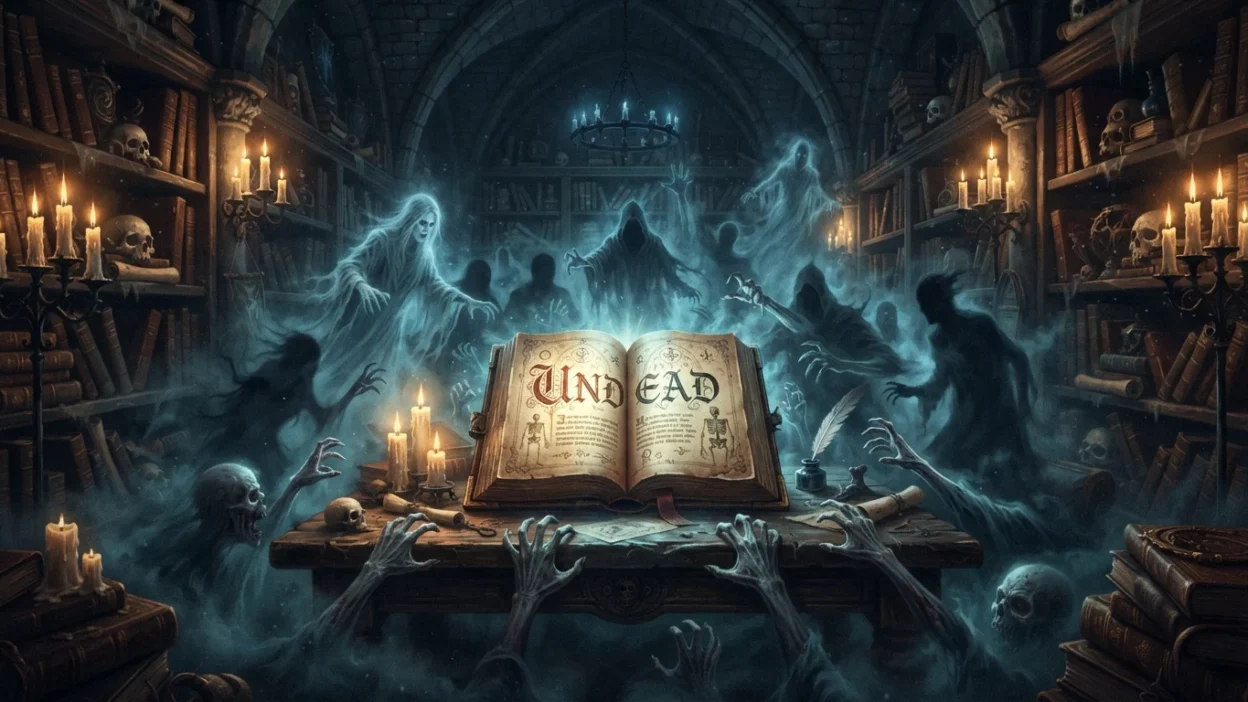
In horror fiction, fantasy literature, and modern pop culture, undead refers to creatures that are dead yet still animate. Zombies, vampires, and ghosts all fall into this category, and they have fascinated storytellers for generations. But to truly master the English language, understanding undead synonyms can help any writer or ESL learner bring their stories and descriptions to life.
The word “undead” describes beings that have returned from death—neither fully alive nor completely dead. This concept appears in myths worldwide, from European vampire legends to Haitian zombie folklore. And for students and content creators, having a robust vocabulary of undead synonyms can open up new creative possibilities.
First: What Does “Demure” Mean?
Before diving into our main list of undead synonyms, let’s understand the word “demure” since it appears in our requirements.
Demure (adjective) means modest, reserved, or shy. It is most often used to describe a person’s behavior or appearance—particularly when someone is quiet and avoids drawing attention to themselves.
Simple examples:
- “She wore a demure dress with a high neckline.”
- “He gave a demure smile and looked down at his feet.”
Tone and usage context: “Demure” suggests a polite, gentle, and somewhat old-fashioned modesty. It often carries a positive tone, but can also imply affectation—someone pretending to be shy when they are not.
30 Synonyms for “Undead”
Here is a comprehensive list of undead synonyms designed for students, ESL learners, and writers. Each synonym includes a simple explanation, an example sentence, and a note on when to use it.
- Zombie-like
Meaning: Resembling a zombie; lifeless yet moving.
Example: “The soldiers moved in a zombie-like trance.”
Usage: Describes mindless, repetitive movement. - Living dead
Meaning: A person who is dead but walks among the living.
Example: “The village feared the living dead that rose from the graveyard.”
Usage: Classic horror term; common in zombie fiction. - Ghostly
Meaning: Like a ghost; pale and barely visible.
Example: “A ghostly figure appeared in the moonlight.”
Usage: Describes supernatural, transparent beings. - Vampiric
Meaning: Like a vampire; blood-drinking or predatory.
Example: “His vampiric smile revealed sharp fangs.”
Usage: Best for vampires or vampire-like characters. - Spectral
Meaning: Relating to a ghost or spirit.
Example: “A spectral hand reached through the wall.”
Usage: Formal word for ghostly apparitions. - Phantom
Meaning: An illusion or ghostly image.
Example: “The phantom knight roamed the castle halls.”
Usage: Suggests haunting or elusive presence. - Wraith-like
Meaning: Like a wraith (ghost or spirit).
Example: “Her wraith-like form vanished into the fog.”
Usage: Poetic and atmospheric. - Revenant
Meaning: A person who returns from the dead.
Example: “The revenant rose from its tomb seeking revenge.”
Usage: Strong literary word for undead returns. - Ghoul-like
Meaning: Like a ghoul; associated with graves and corpses.
Example: “His ghoul-like appearance frightened the children.”
Usage: Suggests grave-robbing or corpse-eating beings. - Cadaverous
Meaning: Like a corpse; pale and thin.
Example: “The prisoner’s cadaverous face showed signs of illness.”
Usage: Describes a death-like appearance. - Necromantic
Meaning: Relating to necromancy (communicating with the dead).
Example: “The wizard performed necromantic rituals.”
Usage: Formal; associated with dark magic. - Unearthly
Meaning: Not of this world; strange and supernatural.
Example: “An unearthly howl came from the forest.”
Usage: Suggests otherworldly or eerie presence. - Supernatural
Meaning: Beyond natural laws; involving ghosts or spirits.
Example: “Supernatural events plagued the old mansion.”
Usage: General term for paranormal activity. - Demonic
Meaning: Like a demon; evil or hellish.
Example: “The creature wore a demonic grin.”
Usage: Strong negative connotation; suggests evil. - Shadowy
Meaning: Dark and difficult to see; mysterious.
Example: “A shadowy figure lurked in the alley.”
Usage: Suggests hidden or secretive presence. - Ghostlike
Meaning: Resembling a ghost; pale and silent.
Example: “He moved through the room with ghostlike silence.”
Usage: Simple, everyday word for ghostly behavior. - Apparitional
Meaning: Like an apparition (ghost).
Example: “The apparitional visitor disappeared at dawn.”
Usage: Formal; describes a ghostly appearance. - Otherworldly
Meaning: Belonging to a different world or dimension.
Example: “The landscape had an otherworldly beauty.”
Usage: Not necessarily evil; suggests strangeness. - Phantasmal
Meaning: Like a phantasm; an illusion or vision.
Example: “The phantasmal ship appeared from the mist.”
Usage: Dreamlike or hallucinatory. - Ethereal
Meaning: Extremely delicate and light; heavenly.
Example: “Her ethereal form drifted through the garden.”
Usage: Positive or neutral tone; suggests beauty. - Spirit-like
Meaning: Like a spirit; non-corporeal.
Example: “The dancer’s movements were spirit-like.”
Usage: Simple; suggests lightness or intangibility. - Shadow-being
Meaning: A creature made of shadow.
Example: “The shadow-being consumed all light around it.”
Usage: Inventive; for dark fantasy settings. - Flesh-eating
Meaning: Consuming human flesh.
Example: “Flesh-eating creatures roamed the wasteland.”
Usage: Specific to zombies and ghouls. - Corpse-like
Meaning: Similar to a dead body.
Example: “His corpse-like features were terrifying.”
Usage: Describes a deathly appearance. - Soulless
Meaning: Without a soul or spirit.
Example: “The soulless husk of a man stared blankly.”
Usage: Suggests emptiness or loss of humanity. - Resurrected
Meaning: Brought back from the dead.
Example: “The resurrected army marched from the tomb.”
Usage: Religious or miraculous context. - Dreadful
Meaning: Causing great fear or dread.
Example: “A dreadful presence filled the room.”
Usage: General term for frightening beings. - Haunting
Meaning: Continuing to appear or cause fear.
Example: “The haunting spirit refused to leave.”
Usage: Emotional; suggests lingering presence. - Cursed
Meaning: Affected by a curse.
Example: “The cursed prince could never die.”
Usage: Suggests punishment or misfortune. - Immortal
Meaning: Living forever; cannot die.
Example: “The immortal vampire hunted for centuries.”
Usage: Emphasizes eternal existence.
Comparison Guide: When to Use Which Synonym
| Tone or Situation | Best Undead Synonyms |
|---|---|
| Horror fiction | Zombie-like, living dead, ghoul-like, flesh-eating |
| Gothic literature | Revenant, spectral, phantasmal, wraith-like |
| Fantasy settings | Vampiric, immortal, cursed, otherworldly |
| Everyday English | Ghostlike, ghostly, supernatural, eerie |
| Formal writing | Cadaverous, apparitional, ethereal |
| Young adult fiction | Phantom, shadowy, spirit-like |
| Dark fantasy | Demonic, necromantic, soulless |
How to Choose the Right Synonym
Choosing the right undead synonym depends on your writing context and intended tone.
For formal or literary writing: Words like “spectral,” “cadaverous,” and “apparitional” are more sophisticated.
For horror or thriller genres: “Zombie-like,” “flesh-eating,” and “ghoul-like” will create the right mood.
For fantasy or supernatural stories: Try “vampiric,” “immortal,” or “otherworldly.”
For general conversation: “Ghostly” and “haunting” are simple and easy to understand.
A helpful tip: Avoid mixing very formal words with casual descriptions. A “spectral knight” sounds better than a “cadaverous knight” in a fantasy setting. Consider what your readers expect from the genre you are writing in.
Conclusion
Understanding undead synonyms enriches your vocabulary and improves your writing. Whether you are an ESL learner, a student, or a professional writer, knowing the right word for the right situation makes your descriptions more vivid and accurate.
Key takeaways:
- “Undead” means dead but still animate
- There are many synonyms with subtle differences in tone
- Choose your words based on context and genre
- Use the comparison table to guide your choices
- Expanding your vocabulary is an ongoing journey
So next time you write about a creature that rises from the grave, remember these undead synonyms and choose the one that fits perfectly with your story. Happy writing!

Amber Amy is a passionate writer at SynonymLot, dedicated to helping readers discover better words, expand their vocabulary, and improve their writing through clear, accurate, and easy-to-understand synonym guides.