Introduction:
Have you ever noticed how often you use the phrase “as a result” in your writing? It’s one of those common expressions that appears frequently in essays, reports, and everyday communication. While it’s a perfectly good phrase, relying on it too heavily can make your writing feel repetitive and dull.
This is where as a result synonyms become incredibly valuable. By expanding your vocabulary with alternatives, you can make your writing more engaging, precise, and professional. Whether you’re a student working on an academic paper, an ESL learner building your English skills, or a content creator looking to improve your craft, mastering synonyms is a game-changer.
In this guide, we’ll explore the meaning of “as a result,” provide you with a comprehensive list of alternatives, and help you understand when to use each one. Let’s dive in and discover how you can elevate your writing with these powerful words and phrases.
What Does “As a Result” Actually Mean?
Before we explore as a result synonyms, let’s understand what the phrase means. “As a result” is used to show that one thing happened because of something else. It indicates a cause-and-effect relationship between two events or situations.
Think of it like this: when you study hard, as a result, you get good grades. The studying is the cause, and the good grades are the effect. The phrase “as a result” connects these two ideas together in a clear and logical way.
Understanding this connection is important because different as a result synonyms can express slightly different types of cause-and-effect relationships. Some are very formal, some are casual, and some have unique shades of meaning that make them perfect for specific contexts.
30 Essential Synonyms for “As a Result”
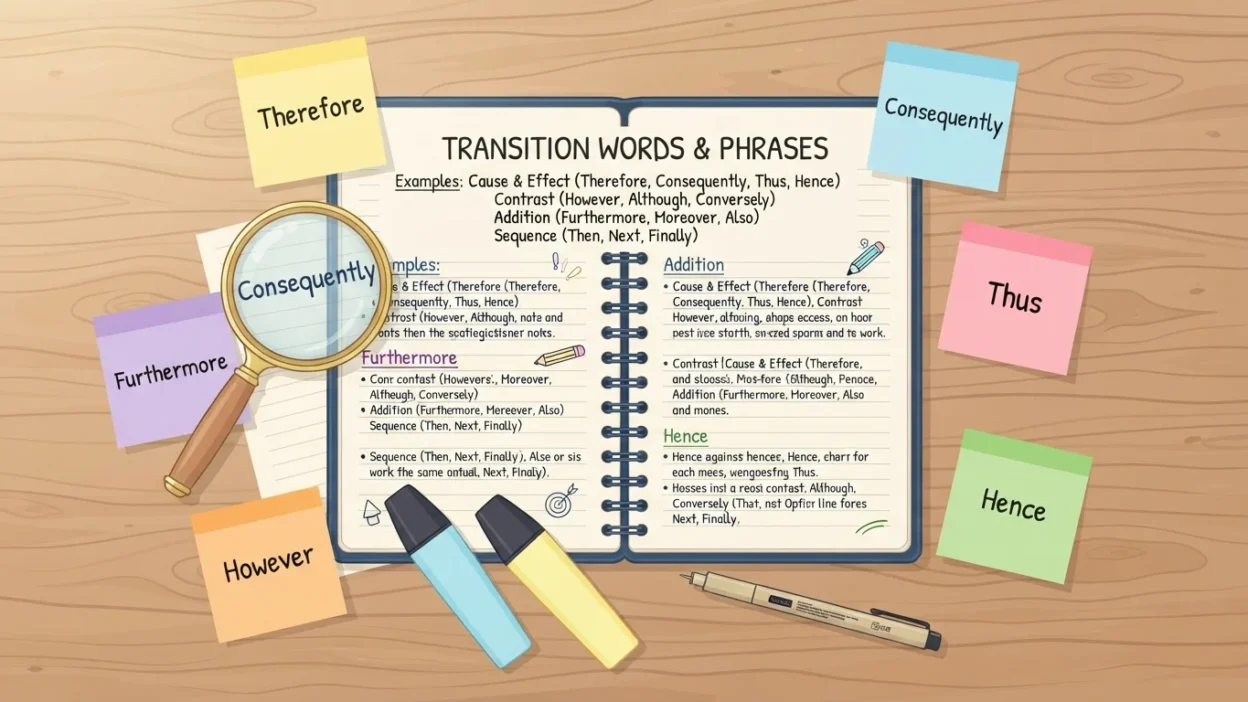
Below is a carefully curated list of 30 as a result synonyms that will help you diversify your vocabulary and improve your writing. For each synonym, we’ve included a simple meaning, an example sentence, and the best context for using it.
1. Consequently
Meaning: Something that follows directly from a previous action or event.
Example: The team practiced hard every day; consequently, they won the championship.
Best Context: Formal writing, academic essays, and professional reports .
2. Therefore
Meaning: For that reason; as a logical result.
Example: She had the highest test scores; therefore, she received the scholarship.
Best Context: Logical arguments, formal writing, and persuasive essays .
3. Thus
Meaning: In this way; as a result or consequence.
Example: The new policy reduced waste; thus, the company saved money.
Best Context: Academic and technical writing .
4. Hence
Meaning: For this reason; consequently.
Example: The traffic was terrible; hence, we arrived late to the meeting.
Best Context: Formal writing, often used in deductive reasoning .
5. So
Meaning: Used to introduce the result or consequence of something.
Example: It started to rain heavily, so we canceled the picnic.
Best Context: Everyday conversation and casual writing .
6. Accordingly
Meaning: In a way that is appropriate to what has been said.
Example: The weather forecast predicted rain; accordingly, we brought umbrellas.
Best Context: Professional and formal writing .
7. As a Consequence
Meaning: Something that happens as a direct result.
Example: The storm damaged the crops; as a consequence, food prices increased.
Best Context: Formal writing that emphasizes direct cause and effect .
8. For This Reason
Meaning: Because of this specific cause.
Example: He was the most qualified candidate; for this reason, we hired him.
Best Context: Neutral, works well in both formal and informal settings .
9. Because of This
Meaning: Due to this specific cause.
Example: She missed the bus; because of this, she was late for work.
Best Context: Conversational and everyday writing .
10. Due to This
Meaning: As a result of this cause.
Example: The computer crashed; due to this, we lost the data.
Best Context: Formal and neutral contexts .
11. In Consequence
Meaning: As a result; following from something.
Example: The experiment failed; in consequence, the research team had to start over.
Best Context: Formal and academic writing .
12. Henceforth
Meaning: From this time forward; as a result.
Example: The rule has been changed; henceforth, all employees must submit reports on Friday.
Best Context: Very formal, often used in legal or official documents.
13. Wherefore
Meaning: For which reason; consequently.
Example: He broke the contract; wherefore, he must pay damages.
Best Context: Very formal, legal, or archaic contexts.
14. Ergo
Meaning: Therefore; consequently.
Example: All humans are mortal; ergo, no one lives forever.
Best Context: Formal, logical, or philosophical writing .
15. Thereby
Meaning: By that means; as a result of that.
Example: She organized a fundraiser, thereby raising enough money for the new library.
Best Context: Formal writing, especially when describing means and ends.
16. Subsequently
Meaning: After that; later.
Example: He lost his job and subsequently had to sell his house.
Best Context: Formal and professional writing .
17. In Turn
Meaning: As a result of something; causing another effect.
Example: Better training improves productivity, which in turn boosts profits.
Best Context: Describing chains of events or circular relationships .
18. That’s Why
Meaning: For that reason (informal).
Example: I love this restaurant; that’s why I come here every week.
Best Context: Casual conversation and informal writing .
19. By Doing So
Meaning: As a result of a specific action.
Example: She apologized sincerely; by doing so, she mended the relationship.
Best Context: Descriptive and reflective writing .
20. As Such
Meaning: In that capacity; as a result.
Example: He was the manager; as such, he was responsible for the project.
Best Context: Formal and professional writing .
21. Owing to This
Meaning: Because of this cause.
Example: The roads were icy; owing to this, many accidents occurred.
Best Context: Formal writing .
22. For That Reason
Meaning: For that specific cause.
Example: I value your opinion; for that reason, I will follow your advice.
Best Context: Conversational and formal contexts .
23. From This
Meaning: Based on this information.
Example: From this, we can see that the strategy was effective.
Best Context: Academic and analytical writing .
24. After That
Meaning: Happening later.
Example: We finished dinner; after that, we went for a walk.
Best Context: Storytelling and simple descriptions .
25. Seeing That
Meaning: Considering the fact that.
Example: Seeing that you’re tired, let’s take a break.
Best Context: Conversational and reflective writing .
26. On This Basis
Meaning: Based on this foundation.
Example: On this basis, we can conclude the project was a success.
Best Context: Formal and professional writing .
27. For These Reasons
Meaning: For multiple causes.
Example: For these reasons, we decided to change our approach.
Best Context: Summing up conclusions .
28. Given That
Meaning: Considering that a condition is true.
Example: Given that it’s raining, we’ll stay indoors.
Best Context: Practical and neutral contexts .
29. In Effect
Meaning: Essentially; in practice.
Example: In effect, the new rule changes everything.
Best Context: Analytical and explanatory writing .
30. In Response
Meaning: As a reaction to something.
Example: In response, the company issued a public apology.
Best Context: Professional and formal writing .
When to Use Different Synonyms: A Comparison Guide
Choosing the right synonym for “as a result” depends on several factors, including the context, formality, and specific meaning you want to convey. Here’s a helpful guide:
| Synonym | Formality Level | Best Used For | Example |
|---|---|---|---|
| Consequently | High | Academic writing, formal reports | The experiment was faulty; consequently, the results were invalid. |
| Therefore | High | Logical conclusions | All evidence points to him; therefore, he is guilty. |
| Thus | High | Technical/scientific writing | The materials expanded; thus, the seal broke. |
| Hence | High | Deductive reasoning | The costs exceeded the budget; hence, we must cut expenses. |
| So | Low | Everyday conversation | It was hot, so I opened the window. |
| Accordingly | High | Professional writing | The plan was flawed; accordingly, we revised it. |
| As a consequence | High | Formal cause-effect | The oil spill spread; as a consequence, marine life suffered. |
| Because of this | Medium | Neutral explanations | I was sick; because of this, I stayed home. |
| That’s why | Low | Casual conversations | She loves cooking; that’s why she became a chef. |
| Subsequently | High | Describing order | He resigned and subsequently moved abroad. |
| In turn | Medium | Chain reactions | Good teaching motivates students; in turn, they learn better. |
How to Choose the Right “As a Result” Synonym
Selecting the perfect as a result synonym is easier when you consider these three factors:
1. Consider Your Audience
If you’re writing for a formal academic journal, words like consequently, therefore, and thus are excellent choices . For a blog post or email to a friend, so, that’s why, or because of this work better .
2. Consider Your Purpose
Are you describing a chain of events? Subsequently or in turn might be best. Are you emphasizing a logical conclusion? Try therefore or hence. Are you explaining something simply? Because of this or for this reason are good options .
3. Consider the Tone
The tone of your writing matters. As a consequence sounds serious and formal, while so is friendly and conversational. Choose the synonym that matches the feeling you want to create .
4. Avoid Repetition
Even if you choose a formal tone, vary your as a result synonyms to keep your writing fresh and interesting. Instead of saying “consequently” five times in an essay, alternate with “therefore,” “thus,” and “accordingly.”
Tips for Using Synonyms Effectively
Here are some practical tips to help you use as a result synonyms naturally:
Read Widely: The best way to learn how these synonyms are used is to read books, articles, and essays that use them effectively.
Practice Daily: Try writing three sentences each day using different as a result synonyms. This habit will help them become part of your natural vocabulary.
Check Context: Before using a synonym, consider whether it fits the context. “Hence” works in formal writing but sounds unnatural in casual conversation.
Use a Thesaurus: Online tools can help you find even more synonyms, but always check the meaning and usage of a word before using it .
Common Mistakes to Avoid with “As a Result” Synonyms
Mistake 1: Using Formal Words in Casual Contexts
Incorrect: It’s cold outside, hence I’ll wear a coat. (Too formal for everyday conversation)
Correct: It’s cold outside, so I’ll wear a coat.
Mistake 2: Using Casual Words in Formal Contexts
Incorrect: The experiment proved the hypothesis, that’s why the paper was published. (Too casual for academic writing)
Correct: The experiment proved the hypothesis; consequently, the paper was published.
Mistake 3: Confusing Similar Words
Don’t confuse: “subsequently” (meaning “later”) with “consequently” (meaning “as a result”). They are not always interchangeable .
Conclusion: Master Your Writing with Synonyms
Learning as a result synonyms is a simple way to become a better writer. By using alternatives like consequently, therefore, and thus, you can make your writing more varied, professional, and interesting .
The 30 synonyms we’ve covered in this article provide a strong starting point for your vocabulary journey. Remember to consider your audience, purpose, and desired tone when choosing which synonym to use. With practice, these alternatives will become natural parts of your writing toolkit.
Start using these as a result synonyms today, and watch your writing transform into something more engaging and polished. Whether you’re a student, an ESL learner, or a content creator, mastering these alternatives will help you communicate more effectively and leave a lasting impression on your readers.

Daniel Jack is a language enthusiast and content writer who specializes in synonyms, vocabulary, and word meanings. He creates clear, engaging resources that help readers improve communication and expand their English skills.