
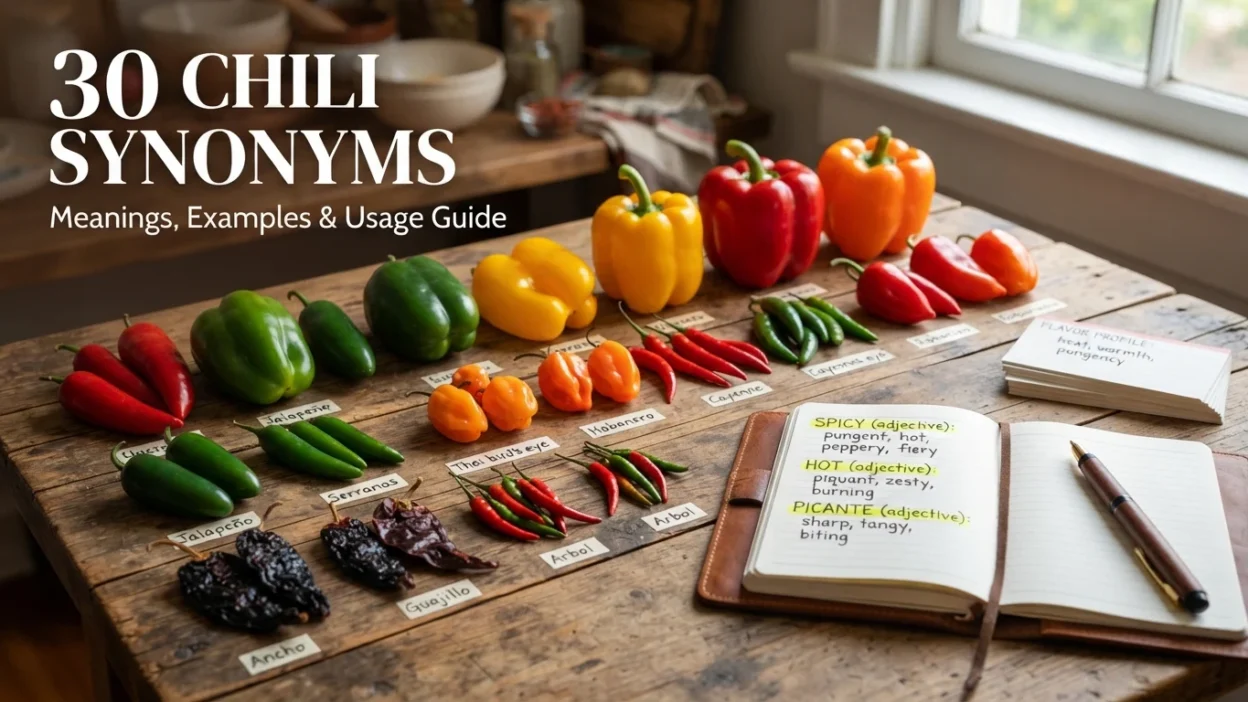
Whether you’re writing a recipe, describing spicy food, talking about peppers, or improving your English vocabulary, knowing different chili synonyms can make your writing more accurate and engaging. Many words related to chili have slightly different meanings depending on the region, type of pepper, or cooking context.
In everyday English, people use words like chili, chile, pepper, capsicum, and hot pepper interchangeably. However, some terms refer to specific varieties, while others are more general. Understanding these differences helps students, ESL learners, writers, and food enthusiasts communicate more naturally.
Note: The original prompt mentions explaining “demure”, but since this article targets “chili synonyms,” the explanation below focuses on chili.
What Does “Chili” Mean?
A chili (also spelled chile) is the fruit of plants belonging to the Capsicum family. It is known for its spicy or hot taste, which comes from a natural compound called capsaicin.
The word chili may refer to:
- Fresh or dried hot peppers
- A specific variety of pepper
- An ingredient used in cooking
- In some cases, a spicy stew called chili con carne (depending on context)
Example
- She added fresh chili to make the soup spicier.
30 Chili Synonyms with Meanings, Examples, and Best Usage
1. Chile
Meaning: Alternative spelling of chili.
Example: The recipe calls for roasted green chile.
Best Usage: American Southwest, Mexican cuisine.
2. Chili Pepper
Meaning: A hot pepper with spicy flavor.
Example: He chopped a red chili pepper.
Best Usage: General cooking.
3. Hot Pepper
Meaning: Any pepper that has heat.
Example: Hot peppers make salsa more flavorful.
Best Usage: Everyday conversation.
4. Capsicum
Meaning: Scientific and international name for pepper plants.
Example: Capsicum belongs to the nightshade family.
Best Usage: Scientific or Australian English.
5. Pepper
Meaning: General term for peppers.
Example: The market sells many kinds of peppers.
Best Usage: General writing.
6. Red Pepper
Meaning: A mature red chili.
Example: She sliced a fresh red pepper.
Best Usage: Cooking descriptions.
7. Green Chili
Meaning: An unripe green chili pepper.
Example: Green chili adds fresh flavor.
Best Usage: Mexican and Southwestern recipes.
8. Jalapeño
Meaning: A medium-hot chili variety.
Example: Jalapeños are perfect for nachos.
Best Usage: Specific pepper variety.
9. Serrano
Meaning: A hotter pepper than jalapeño.
Example: The salsa contains serrano peppers.
Best Usage: Authentic Mexican dishes.
10. Habanero
Meaning: Very hot orange or red pepper.
Example: Habaneros should be used carefully.
Best Usage: Extra spicy recipes.
11. Cayenne
Meaning: Thin, hot red pepper.
Example: Add cayenne for extra heat.
Best Usage: Spice blends.
12. Bird’s Eye Chili
Meaning: Small, very spicy pepper.
Example: Thai curry often includes bird’s eye chili.
Best Usage: Asian cuisine.
13. Poblano
Meaning: Mild Mexican chili.
Example: Stuffed poblanos are delicious.
Best Usage: Mexican recipes.
14. Anaheim Pepper
Meaning: Mild green chili.
Example: Anaheim peppers roast well.
Best Usage: Mild dishes.
15. Fresno Pepper
Meaning: Medium-hot red pepper.
Example: Fresno peppers brighten salsa.
Best Usage: Fresh recipes.
16. Scotch Bonnet
Meaning: Extremely hot Caribbean pepper.
Example: Scotch bonnet gives jerk chicken its heat.
Best Usage: Caribbean cooking.
17. Ghost Pepper
Meaning: One of the hottest peppers.
Example: Ghost peppers require caution.
Best Usage: Extreme spice.
18. Carolina Reaper
Meaning: Exceptionally hot chili.
Example: The Carolina Reaper is famous worldwide.
Best Usage: Heat challenges.
19. Thai Chili
Meaning: Small, spicy Asian pepper.
Example: Thai chili adds sharp heat.
Best Usage: Thai cuisine.
20. Chipotle
Meaning: Smoked dried jalapeño.
Example: Chipotle gives barbecue sauce a smoky flavor.
Best Usage: Mexican-inspired dishes.
21. Dried Chili
Meaning: Pepper dried for storage.
Example: Dried chilies create rich sauces.
Best Usage: Traditional cooking.
22. Chili Pod
Meaning: Whole chili fruit.
Example: The chef used dried chili pods.
Best Usage: Gardening and cooking.
23. Spicy Pepper
Meaning: Pepper with noticeable heat.
Example: Spicy peppers vary in intensity.
Best Usage: Everyday English.
24. Fiery Pepper
Meaning: Very hot pepper.
Example: Fiery peppers are not for everyone.
Best Usage: Descriptive writing.
25. Heat Pepper
Meaning: Informal description of hot pepper.
Example: Choose a heat pepper for spicy dishes.
Best Usage: Casual conversations.
26. Capsaicin Pepper
Meaning: Pepper known for heat-producing capsaicin.
Example: Capsaicin peppers create a burning sensation.
Best Usage: Educational articles.
27. Spice Pepper
Meaning: Pepper used to increase spiciness.
Example: The spice pepper improved the curry.
Best Usage: Informal cooking discussions.
28. Hot Chili
Meaning: Particularly spicy chili.
Example: This hot chili is very strong.
Best Usage: General food writing.
29. Fresh Chili
Meaning: Newly harvested chili.
Example: Fresh chili tastes brighter than dried.
Best Usage: Recipe writing.
30. Chili Pod Pepper
Meaning: Whole mature chili fruit.
Example: Dry the chili pod pepper before grinding.
Best Usage: Gardening and spice preparation.
Chili Synonyms Comparison Table
| Word | Heat Level | Best Used For |
|---|---|---|
| Chili | General | Everyday English |
| Chile | Regional spelling | Mexican cuisine |
| Pepper | General | Casual writing |
| Capsicum | Neutral | Scientific or Australian English |
| Jalapeño | Medium | Tex-Mex recipes |
| Serrano | Medium-Hot | Salsa |
| Cayenne | Hot | Powder and seasoning |
| Habanero | Very Hot | Hot sauces |
| Chipotle | Smoky | BBQ and Mexican dishes |
| Ghost Pepper | Extremely Hot | Spice challenges |
| Carolina Reaper | Extreme | Specialty discussions |
| Thai Chili | Very Hot | Asian recipes |
How to Choose the Right Chili Synonym
Choosing the best synonym depends on what you want to communicate.
For General Writing
Use:
- Chili
- Chile
- Pepper
- Hot Pepper
These are easy for most readers to understand.
For Recipes
Choose:
- Jalapeño
- Serrano
- Poblano
- Anaheim
- Chipotle
- Cayenne
These describe specific pepper varieties.
For Scientific Writing
Use:
- Capsicum
- Capsaicin Pepper
These are accurate in educational contexts.
For Descriptive Food Writing
Use:
- Fiery Pepper
- Spicy Pepper
- Hot Chili
- Fresh Chili
These make food descriptions more vivid.
For International Cuisine
Choose names based on regional dishes:
- Thai Chili
- Scotch Bonnet
- Bird’s Eye Chili
- Habanero
Common Mistakes When Using Chili Synonyms
Many learners confuse pepper, bell pepper, and chili pepper.
Remember:
- Bell pepper is usually not spicy.
- Chili pepper is spicy.
- Capsicum may refer to sweet or hot peppers depending on the country.
- Chile and chili are often interchangeable, but spelling preferences differ by region.
Why Learning Chili Synonyms Is Helpful
Expanding your vocabulary helps you:
- Write better recipes
- Describe food more accurately
- Improve ESL vocabulary
- Avoid repeating the same word
- Understand international cooking terms
- Create more engaging blog posts and articles
Frequently Asked Questions
Is “chile” the same as “chili”?
Yes. They usually refer to the same type of spicy pepper. The preferred spelling depends on the region and style guide.
Is capsicum a synonym for chili?
Partly. Capsicum is the botanical genus that includes both sweet and hot peppers. In Australia and some other countries, “capsicum” often refers to bell peppers.
Which synonym is best for recipes?
Specific pepper names like jalapeño, serrano, chipotle, or cayenne are the most accurate.
Are all peppers spicy?
No. Bell peppers are sweet and contain little or no capsaicin, while chili peppers are spicy.
Conclusion
Learning chili synonyms helps you choose the most accurate word for recipes, conversations, educational writing, and creative content. While general terms like chili, chile, and hot pepper work in everyday English, specific names such as jalapeño, serrano, chipotle, and habanero provide greater precision. By understanding each synonym’s meaning, usage, and context, you can communicate more clearly and confidently while expanding your English vocabulary.

Daniel Jack is a language enthusiast and content writer who specializes in synonyms, vocabulary, and word meanings. He creates clear, engaging resources that help readers improve communication and expand their English skills.