
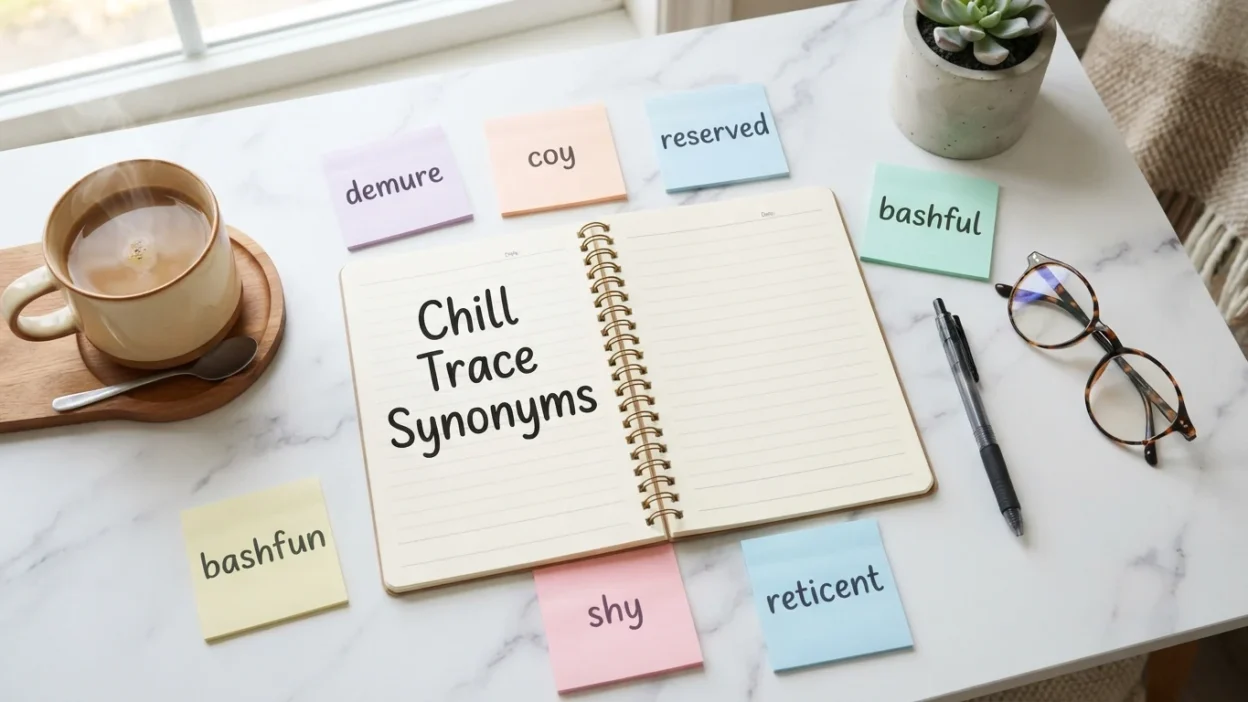
Have you ever struggled to find the perfect word to describe someone who is quiet, modest, and reserved? You’re not alone! Vocabulary building is an essential part of language learning, and understanding the subtle differences between similar words can transform your writing. Today, we’re exploring “chill trace synonyms” specifically focusing on the word “demure” and all its alternatives that share similar meanings and gentle vibes.
if you’re a student preparing for exams, an ESL learner expanding your vocabulary, a writer polishing your prose, or a content creator crafting engaging material, mastering synonyms is your secret weapon. Using the right word at the right time makes your communication clearer, more professional, and more engaging.
Let’s dive into the meaning of “demure” first, explore 30 fantastic synonyms, and learn exactly when to use each one. By the end of this guide, you’ll have a rich vocabulary toolkit at your disposal.
Understanding “Demure”: Meaning and Usage
So, what does “demure” actually mean? In simple English, demure describes someone who is quiet, shy, and modest in their behavior or appearance . Think of a person who speaks softly, avoids drawing attention to themselves, and dresses in a simple, modest way.
Tone and Context: “Demure” often carries a gentle, slightly old-fashioned charm. It can be a genuine compliment describing someone polite and reserved, but it can also describe someone who is pretending to be shy in a playful or coy way . The word is commonly used to describe women and girls, but it can apply to anyone displaying quiet modesty .
- “She gave a demure smile when her teacher praised her work.”
- “He dressed in a demure gray suit for the formal meeting.”
Important Note: Don’t confuse “demure” with “demur.” “Demur” (spelled differently) is a verb that means to object or show hesitation . Remember: demure = shy and modest; demur = to object.
30 Synonyms of Demure with Explanations and Examples
Here are 30 fantastic synonyms for “demure,” carefully selected for ESL learners and writers. Each entry includes the word, a simple meaning, an example sentence, and the best context for using it.
Quiet & Reserved Group
- Reserved
- Meaning: Keeping your feelings and thoughts to yourself; not showing emotions openly.
- Example: “The new student was quiet and reserved on his first day.”
- Usage Context: Best for describing people who don’t share personal information easily.
- Shy
- Meaning: Nervous or timid around other people.
- Example: “She was too shy to ask questions in class.”
- Usage Context: Use for people who feel uncomfortable in social situations.
- Modest
- Meaning: Not talking too much about your abilities or achievements; humble. Also refers to simple clothing.
- Example: “Despite winning the award, she remained modest.”
- Usage Context: Perfect for describing humble people or simple outfits .
- Retiring
- Meaning: Shy and preferring to stay away from social attention.
- Example: “After the party, the retiring host quietly left the room.”
- Usage Context: Describes people who actively avoid being the center of attention.
- Bashful
- Meaning: Easily embarrassed and shy, especially around new people.
- Example: “The bashful child hid behind his mother’s skirt.”
- Usage Context: Great for describing shyness in children or romantic situations.
- Meek
- Meaning: Quiet, gentle, and easy to persuade or control.
- Example: “The meek assistant never complained about long working hours.”
- Usage Context: Describes people who are overly submissive or patient.
- Timid
- Meaning: Showing a lack of courage or confidence; easily frightened.
- Example: “The timid puppy shook in the corner.”
- Usage Context: Use for people or animals who are fearful or hesitant.
- Reticent
- Meaning: Not willing to share your thoughts or feelings; quiet.
- Example: “He was reticent about his past and avoided discussing it.”
- Usage Context: Describes people who are silent on specific topics.
- Diffident
- Meaning: Lacking self-confidence; shy and unsure of yourself.
- Example: “She gave a diffident answer, unsure if it was correct.”
- Usage Context: Describes someone who doubts their own abilities.
- Unassuming
- Meaning: Not trying to seem important; modest and down-to-earth.
- Example: “The famous actor was surprisingly unassuming in person.”
- Usage Context: Describes famous or successful people who remain humble.
Proper & Polite Group
- Decorous
- Meaning: Polite and appropriate in behavior or dress.
- Example: “The guests maintained decorous behavior at the formal dinner.”
- Usage Context: Use for situations requiring formal manners.
- Sedate
- Meaning: Calm, slow, and dignified; not easily excited.
- Example: “They walked at a sedate pace through the garden.”
- Usage Context: Describes people or actions that are calm and unhurried.
- Prim
- Meaning: Very formal, proper, and easily shocked by things that are rude.
- Example: “The prim old lady never wore bright colors.”
- Usage Context: Slightly negative; describes overly strict behavior.
- Prudish
- Meaning: Easily shocked by sex or nudity; very proper.
- Example: “Her prudish aunt refused to watch the movie.”
- Usage Context: Describes people with strict moral views about modesty.
- Staid
- Meaning: Calm and serious; not exciting or fun.
- Example: “The staid atmosphere of the library suited him.”
- Usage Context: Describes places, people, or situations that are serious and quiet.
Modest Appearance Group
- Coy
- Meaning: Pretending to be shy or modest, often in a playful way.
- Example: “She gave him a coy smile and looked away.”
- Usage Context: Describes playful or flirtatious shyness .
- Discreet
- Meaning: Careful not to attract attention; respectful of privacy.
- Example: “He was discreet about his personal life at work.”
- Usage Context: Use for people who can keep secrets.
- Pious
- Meaning: Deeply religious and devoted, often showing humility.
- Example: “The pious nun spoke softly in the chapel.”
- Usage Context: Describes religious devotion and humility.
- Soften-spoken
- Meaning: Speaking with a quiet, gentle voice.
- Example: “The soft-spoken teacher always calmed her students.”
- Usage Context: Describes vocal tone rather than personality.
- Chaste
- Meaning: Not having sex; pure and modest.
- Example: “He wore a chaste expression of innocence.”
- Usage Context: Describes purity or simple, unadorned style.
Humble & Low-Key Group
- Humble
- Meaning: Not feeling or showing pride; modest.
- Example: “The humble worker never boasted about his success.”
- Usage Context: Describes people who don’t show off.
- Self-effacing
- Meaning: Not wanting to attract attention; modest.
- Example: “Her self-effacing nature made her a great team player.”
- Usage Context: Describes people who downplay their importance.
- Unostentatious
- Meaning: Not showing off; simple and modest.
- Example: “They lived in an unostentatious house in the suburbs.”
- Usage Context: Describes modest lifestyles or possessions.
- Low-key
- Meaning: Not flashy, exciting, or attention-seeking.
- Example: “She preferred low-key celebrations to big parties.”
- Usage Context: Casual word for describing simple preferences.
- Down-to-earth
- Meaning: Practical, realistic, and unpretentious.
- Example: “The celebrity seemed incredibly down-to-earth.”
- Usage Context: Describes people who aren’t arrogant.
Specific Nuance Group
- Overmodest
- Meaning: Excessively or falsely modest.
- Example: “His overmodest speech seemed insincere.”
- Usage Context: Slightly negative; describes fake humility .
- Maidenly
- Meaning: Suitable for a young, unmarried woman; demure.
- Example: “She behaved with maidenly modesty.”
- Usage Context: Old-fashioned; describes youthful modesty.
- Reverent
- Meaning: Showing deep respect, often for something sacred.
- Example: “The audience was reverent during the performance.”
- Usage Context: Describes respect in formal or religious settings.
- Abashed
- Meaning: Feeling embarrassed or ashamed.
- Example: “He was abashed by his thoughtless mistake.”
- Usage Context: Describes temporary embarrassment.
- Contrite
- Meaning: Feeling sorry and guilty for doing something wrong.
- Example: “She offered a contrite apology to her friend.”
- Usage Context: Describes remorse after an error.
Comparison Table: When to Use Different Synonyms
| Situation | Best Synonym | Why It Works |
|---|---|---|
| Describing a polite student | Reserved, Modest | Shows quiet behavior without negativity |
| Playful shyness | Coy | Captures playful, flirtatious modesty |
| Professional setting | Sedate, Decorous | Conveys seriousness and formality |
| Religious context | Pious, Reverent | Shows devotion and humility |
| Someone faking modesty | Overmodest, Prim | Hints at insincerity or strictness |
| Casual conversation | Low-key, Unassuming | Simple, friendly tone |
| Describing clothing | Chaste, Modest | Emphasizes simplicity and coverage |
| Fearful shyness | Timid, Bashful | Highlights nervousness or embarrassment |
How to Choose the Right Synonym
Choosing the perfect synonym depends on the tone you want to express. Here’s a simple guide:
For General Quiet People
Use: Reserved, Shy, Modest
- These are the most common and safe choices.
For Playful or Flirtatious Situations
Use: Coy, Bashful
- These add a hint of charm and playfulness.
For Serious or Formal Settings
Use: Sedate, Decorous, Reticent
- These sound professional and respectful.
For Negative Feelings (Fake or Annoying Modesty)
Use: Prim, Prudish, Overmodest
- These suggest someone is pretending or being too strict.
For Down-to-Earth People
Use: Unassuming, Humble, Self-effacing
- These describe genuinely modest people.
Quick Tip: Think about whether you’re describing a person’s natural personality or a temporary mood. Also consider if you want to sound formal, casual, positive, or slightly negative. This will help you pick the best “chill trace synonym” for your specific situation.
Conclusion
Vocabulary building doesn’t have to be boring! By exploring “chill trace synonyms” for words like “demure,” you’re opening up a world of expressive possibilities. if you choose “reserved” for its simplicity, “coy” for its playful charm, or “sedate” for its formal grace, each synonym adds a unique shade of meaning to your language.
The 30 synonyms we’ve explored give you the flexibility to describe quiet, modest people in any context. Remember, the best writers and speakers choose their words carefully, and now you have the tools to do the same.
Start small! Pick 5–10 new synonyms to practice this week. Try using them in your writing and conversations. With regular practice, you’ll naturally choose the perfect word every time. Keep learning, keep practicing, and your vocabulary will continue to grow!

Amber Amy is a passionate writer at SynonymLot, dedicated to helping readers discover better words, expand their vocabulary, and improve their writing through clear, accurate, and easy-to-understand synonym guides.