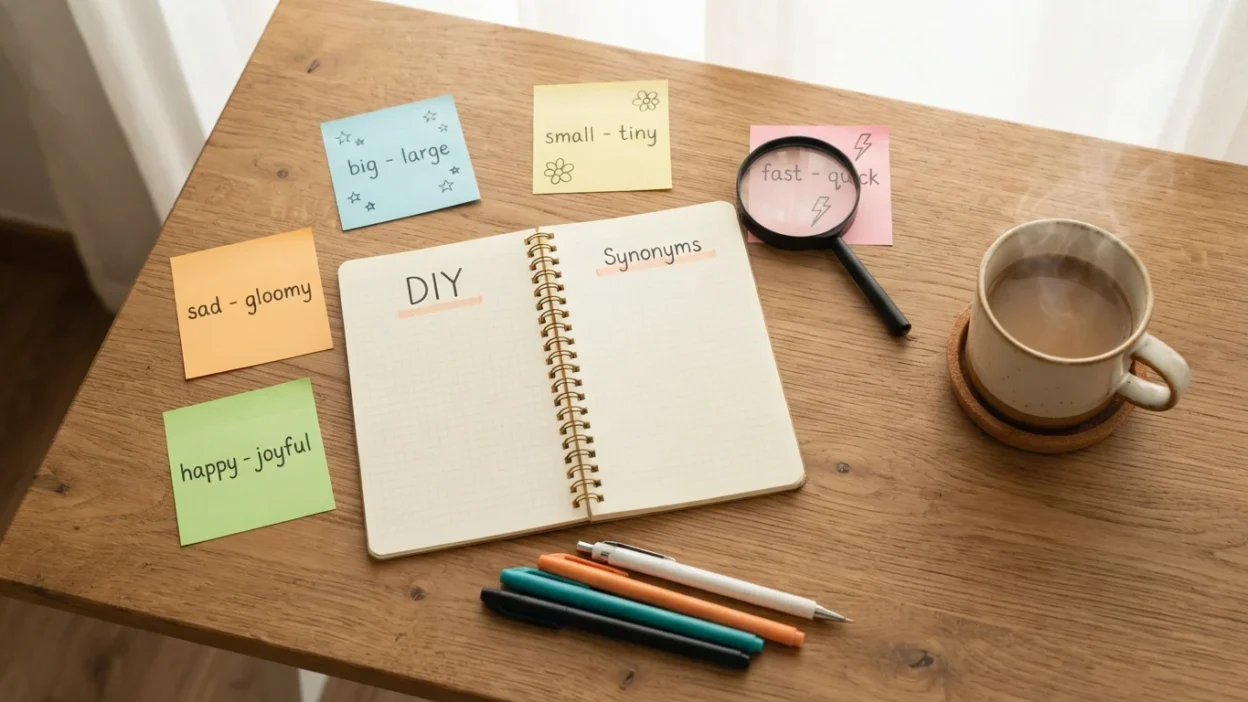
Have you ever found yourself staring at a blank page, knowing exactly what you want to say but struggling to find just the right word? You’re not alone. Whether you’re writing an essay, crafting a social media post, or preparing a professional presentation, having a rich vocabulary at your fingertips can transform your communication from ordinary to extraordinary. This is where the concept of “DIY synonyms” comes into play taking charge of your own vocabulary development by actively seeking out and understanding words that express exactly what you mean.
Building your personal synonym collection is like being a chef who knows exactly which spice to add to create the perfect flavor. It’s not about memorizing lists but understanding the subtle differences between words that seem similar on the surface. For students preparing for exams, ESL learners navigating English nuances, writers seeking precision, or content creators aiming to engage their audience, mastering the art of choosing the right word is an invaluable skill.
In this comprehensive guide, we’ll explore how to build your own synonym toolkit, with a special focus on understanding and using the word “demure” and its many alternatives. By the end, you’ll feel confident in your ability to select the perfect word for any situation truly the essence of DIY synonyms.
What Does “Demure” Mean?
Before we dive into our list of synonyms, let’s first understand what “demure” truly means. In simple English, “demure” describes someone who is quiet, modest, and reserved in their behavior or appearance. It’s often used to describe women or girls who are shy, proper, and modest in a charming way. Think of a person who doesn’t draw attention to themselves but still carries themselves with grace and dignity.
The tone of “demure” is generally positive, suggesting a gentle, refined quality. However, context matters—sometimes it can imply that someone is overly proper or shy in a way that might be seen as old-fashioned. Understanding this nuance is exactly what DIY synonyms is all about—knowing when to use a word and when a different choice might be better.
For example, you might say: “She wore a demure dress to the wedding, with a high neckline and long sleeves.” Here, “demure” suggests the dress is modest and elegant, not flashy or revealing.
30 Synonyms for Demure
Now, let’s explore 30 alternatives to “demure.” Each has its own shade of meaning, making them valuable additions to your DIY synonyms collection.
1. Modest
Meaning: Not showing off; humble about your abilities or appearance.
Example sentence: Despite winning the award, she remained modest about her achievements.
Best usage context: Use when describing someone who doesn’t boast or draw attention to themselves.
2. Reserved
Meaning: Quiet and restrained in behavior; keeping feelings to yourself.
Example sentence: He was reserved at the party, preferring to listen rather than talk.
Best usage context: Great for describing someone who is thoughtful and doesn’t readily share personal feelings.
3. Shy
Meaning: Nervous or uncomfortable around other people; easily embarrassed.
Example sentence: She was too shy to sing in front of the crowd.
Best usage context: Use when describing someone who feels anxious in social situations.
4. Meek
Meaning: Quiet, gentle, and willing to do what others say.
Example sentence: The meek assistant never complained, even when asked to work late.
Best usage context: Often implies a lack of confidence or assertiveness; can be positive or negative depending on context.
5. Retiring
Meaning: Shy and preferring not to be with other people.
Example sentence: Her retiring nature made her a calm presence in the room.
Best usage context: Describes someone who naturally avoids being the center of attention.
6. Unassuming
Meaning: Not trying to seem important or impressive; modest.
Example sentence: The famous actor was surprisingly unassuming in person.
Best usage context: Perfect for describing someone who doesn’t show off despite having talent or status.
7. Reticent
Meaning: Not willing to speak much or share opinions.
Example sentence: He was reticent about his past, changing the subject whenever asked.
Best usage context: Good for describing someone who holds back information or thoughts.
8. Coy
Meaning: Acting shy or modest in a playful way.
Example sentence: She gave a coy smile and looked away when he complimented her.
Best usage context: Implies deliberate, often flirtatious, modesty.
9. Prim
Meaning: Very proper and formal; easily shocked by bad behavior.
Example sentence: The prim old lady frowned at the children’s loud laughter.
Best usage context: Suggests being overly proper or strict about manners.
10. Proper
Meaning: Behaving in a way that is socially correct and accepted.
Example sentence: She always used proper etiquette at formal dinners.
Best usage context: Describes someone who follows social rules carefully.
11. Sedate
Meaning: Calm and dignified; not acting hastily.
Example sentence: The sedate gathering was peaceful and quiet.
Best usage context: Emphasizes calmness and lack of excitement.
12. Demurest (superlative form)
Meaning: The most demure; extremely modest or reserved.
Example sentence: She was the demurest of all the bridesmaids.
Best usage context: Used for comparisons to emphasize extreme modesty.
13. Bashful
Meaning: Easily embarrassed and uncomfortable in social situations.
Example sentence: The bashful boy hid behind his mother when strangers spoke to him.
Best usage context: Often describes someone who blushes or looks down when nervous.
14. Decorous
Meaning: Behaving with dignity and proper manners.
Example sentence: The decorous behavior at the wedding impressed the guests.
Best usage context: Emphasizes adherence to social etiquette.
15. Timid
Meaning: Showing fear or lack of confidence; easily frightened.
Example sentence: The timid kitten hid under the sofa for hours.
Best usage context: Implies fearfulness or extreme caution.
16. Diffident
Meaning: Lacking self-confidence; doubting your abilities.
Example sentence: He was diffident about giving the presentation, feeling unprepared.
Best usage context: Good for describing self-doubt rather than just shyness.
17. Gentle
Meaning: Kind and mild in temperament; not rough.
Example sentence: Her gentle voice calmed the anxious patient.
Best usage context: Emphasizes kindness and softness.
18. Subdued
Meaning: Quiet and controlled; lacking energy or excitement.
Example sentence: The subdued crowd waited nervously for the announcement.
Best usage context: Describes an atmosphere or person lacking in noise or enthusiasm.
19. Mannerly
Meaning: Behaving with good manners; polite.
Example sentence: The mannerly children said please and thank you.
Best usage context: Focuses on politeness and good breeding.
20. Composed
Meaning: Calm and in control of your emotions.
Example sentence: She remained composed during the stressful interview.
Best usage context: Emphasizes emotional control rather than shyness.
21. Mild
Meaning: Gentle and not severe or harsh.
Example sentence: His mild manner made him easy to talk to.
Best usage context: Describes a gentle, non-aggressive personality.
22. Obedient
Meaning: Doing what you’re told; following rules.
Example sentence: The obedient student always completed her homework.
Best usage context: Focuses on following instructions.
23. Deferential
Meaning: Showing respect to someone older or more important.
Example sentence: He was deferential to his boss, never arguing.
Best usage context: Implies respect and submission to authority.
24. Serene
Meaning: Calm, peaceful, and untroubled.
Example sentence: The serene garden was her favorite place to relax.
Best usage context: Emphasizes inner peace and tranquility.
25. Modest (as in clothing)
Meaning: Not showing too much of the body.
Example sentence: She chose a modest swimsuit for the beach.
Best usage context: Describes clothing or appearance that covers the body.
26. Respectable
Meaning: Well-behaved and worthy of respect.
Example sentence: He came from a respectable, hardworking family.
Best usage context: Focuses on being socially accepted and admired.
27. Quiet
Meaning: Making little or no noise; silent.
Example sentence: She was a quiet student who never disrupted class.
Best usage context: Simple and straightforward description of low noise levels.
28. Solemn
Meaning: Serious and dignified; not happy or playful.
Example sentence: The solemn ceremony honored the veterans.
Best usage context: Emphasizes seriousness and formality.
29. Grave
Meaning: Serious and solemn; giving cause for concern.
Example sentence: He spoke in a grave tone about the situation.
Best usage context: Often implies seriousness about something important or sad.
30. Placid
Meaning: Calm and not easily excited.
Example sentence: The placid lake reflected the blue sky.
Best usage context: Describes calmness in both people and nature.
Comparison Table: When to Use Which Synonym
| Word | Best For | When NOT to Use |
|---|---|---|
| Modest | Describing humble behavior | When describing actual fear |
| Reserved | Quiet, thoughtful people | When you mean outgoing |
| Shy | Social anxiety | When you mean proper behavior |
| Meek | Submissive behavior | When describing confident people |
| Coy | Playful modesty | In serious or formal writing |
| Prim | Overly proper behavior | When you mean naturally shy |
| Timid | Fearful behavior | When you mean dignified calmness |
| Sedate | Calm gatherings or people | When describing young, energetic people |
| Reticent | Withholding opinions | When describing physical quietness |
| Unassuming | Not showing off talents | When describing someone who is just shy |
How to Choose the Right Synonym
Building your DIY synonyms toolkit means understanding when to use each word. Here are some helpful groupings to guide your choices:
Group 1: For Genuine Shyness and Introversion
- Shy: Temporary social nervousness
- Bashful: Embarrassed and easily flustered
- Timid: Lacking confidence, often fearful
- Reticent: Quiet about sharing thoughts
Group 2: For Modesty and Humility
- Modest: Not boasting about achievements
- Unassuming: Not trying to impress
- Diffident: Lacking belief in your own abilities
Group 3: For Proper and Refined Behavior
- Prim: Extremely proper, possibly strict
- Decorous: Showing good manners
- Mannerly: Politely behaved
- Respectable: Worthy of approval
Group 4: For Calmness and Control
- Composed: Emotionally in control
- Sedate: Calm and dignified
- Serene: Peaceful and untroubled
- Placid: Not easily disturbed
Group 5: For Seriousness
- Solemn: Serious and formal
- Grave: Deeply serious, often concerning
- Subdued: Quiet in a serious way
Practical Tips for Building Your DIY Synonyms Collection
- Read widely and pay attention to word choices. Notice how authors describe characters and situations.
- Use a thesaurus but always check the meaning and context of words. Not all synonyms are interchangeable!
- Keep a vocabulary journal where you write down new words and example sentences.
- Practice using new words in your own writing. This is the true essence of DIY synonyms—making new words your own.
- Think about context before choosing a word. A word that works well in a wedding invitation might not be appropriate for a news article.
Conclusion: Your Vocabulary, Your Power
Mastering the art of selecting the perfect word is a journey, not a destination. The more you practice, the more natural it becomes. Remember, DIY synonyms isn’t about showing off it’s about expressing yourself clearly and precisely. Whether you’re writing a school essay, creating content, or just trying to be better understood, having a rich vocabulary gives you the power to say exactly what you mean.
The 30 synonyms for demure we’ve explored today are just the beginning. Each new word you learn opens doors to new ways of thinking and communicating. Keep exploring, keep practicing, and most importantly, keep making language your own. Your readers and your grades will thank you.

David Henry is a language enthusiast and content writer specializing in synonyms, vocabulary, and word meanings. He creates clear, engaging resources that help readers improve their writing, communication, and English skills.