Have you ever wondered if to write crumby or crummy? These two words look and sound almost identical, so it is easy to confuse them. However, they have different meanings and are not always interchangeable. Choosing the correct spelling depends on what you want to describe.
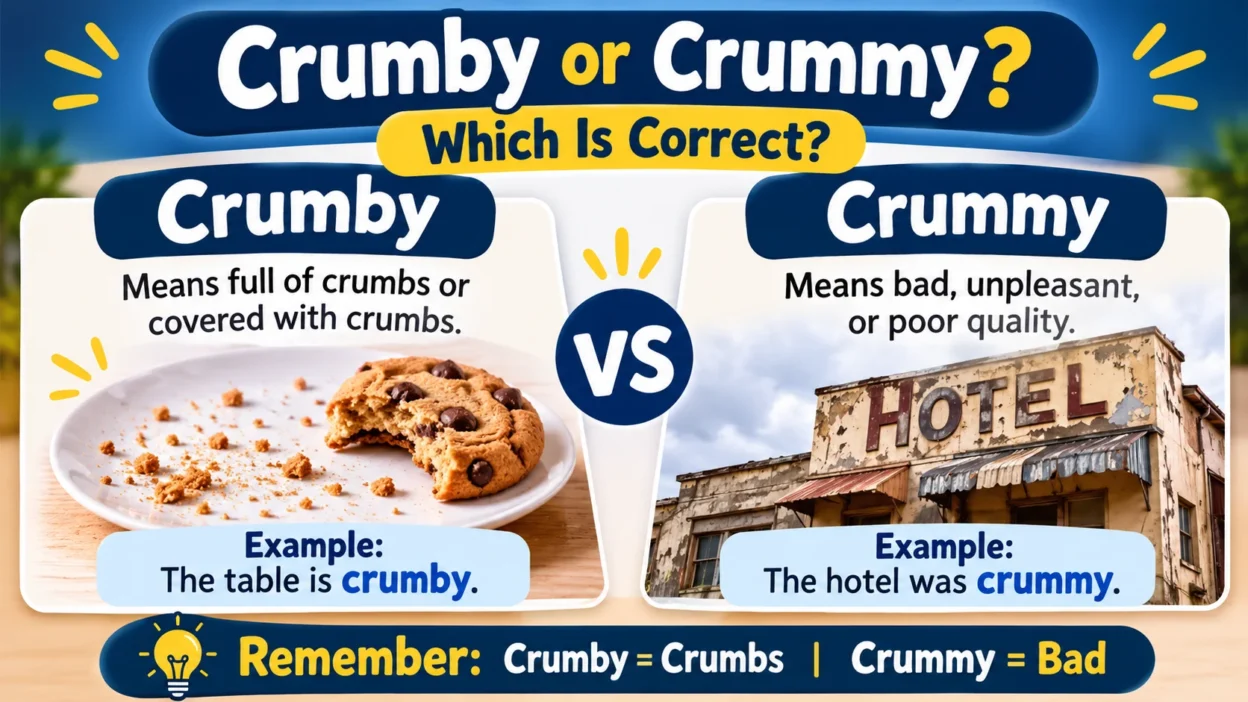
Both crumby and crummy are recognized English words, but they serve different purposes. Crumby generally describes something that contains crumbs or is covered with small pieces of food, while crummy means something is unpleasant, poor in quality, disappointing, or generally bad. Understanding this distinction will help you use each word correctly in everyday conversations, academic writing, and informal communication.
Quick Answer: Crumby vs Crummy
Crumby means full of crumbs or resembling crumbs, especially small pieces of bread or food. Crummy means bad, unpleasant, disappointing, or low-quality. For example, a crumby kitchen floor has crumbs on it, while a crummy hotel provides an unpleasant experience. Both spellings are correct, but their meanings differ.
Why Do People Confuse Crumby and Crummy?
People often confuse crumby and crummy because they:
- Sound almost identical when spoken.
- Have similar spellings.
- Are both adjectives.
- Can appear in informal conversations.
- Differ by only one letter in their endings.
The confusion also comes from the word crumb, which is associated with small pieces of food. However, crummy has developed a separate meaning associated with something unpleasant or inferior.
1. Crumby: Meaning, Definition, and Examples
Crumby is an adjective that means containing crumbs, covered with crumbs, or resembling crumbs.
It comes from the noun crumb, which refers to a small piece of bread, cake, or another food.
Examples of Crumby in Sentences
- The kitchen counter became crumby after breakfast.
- My little brother left a crumby mess on the table.
- The floor was crumby after the children ate cookies.
- I need to clean this crumby kitchen surface.
- The sandwich left a crumby trail across the plate.
- Her hands were crumby after eating the biscuits.
When Should You Use Crumby?
Use crumby when describing something that:
- Contains small pieces of food.
- Is covered with crumbs.
- Has a crumb-like texture.
- Leaves crumbs behind.
Simple example: The sofa is crumby because someone ate crackers on it.
2. Crummy: Meaning, Definition, and Examples
Crummy is an informal adjective meaning bad, unpleasant, poor-quality, disappointing, or unsatisfactory.
It is commonly used in everyday American English to describe negative experiences, objects, situations, or feelings.
Examples of Crummy in Sentences
- We stayed in a crummy hotel during our vacation.
- I had a crummy day at work.
- The restaurant served crummy food.
- He bought a crummy phone that stopped working.
- That was a crummy excuse for being late.
- She felt crummy after catching a cold.
- The weather was crummy throughout the weekend.
- I received crummy customer service at the store.
When Should You Use Crummy?
Use crummy when describing something that is:
- Poor in quality.
- Unpleasant or disappointing.
- Unsatisfactory.
- Of little value.
- Making someone feel physically or emotionally unwell.
Simple example: The movie was crummy because the story was boring.
Crumby vs Crummy: Key Differences
| Feature | Crumby | Crummy |
|---|---|---|
| Part of speech | Adjective | Adjective |
| Main meaning | Full of crumbs | Bad or unpleasant |
| Related word | Crumb | Informal negative adjective |
| Usage | Descriptive | Informal and negative |
| Example | A crumby table | A crummy table |
| Tone | Usually neutral | Negative |
| Common context | Food and cleanliness | Quality and experiences |
The main difference is that crumby describes crumbs, whereas crummy expresses a negative judgment about something.
When to Use Crumby vs Crummy
Choosing between these words becomes easier when you understand the context.
Use Crumby When:
- You are describing a surface covered with food crumbs.
- You are talking about a messy eating area.
- You are describing something with a crumb-like texture.
Example: The dining table is crumby after dinner.
Use Crummy When:
- You are describing something unpleasant.
- You want to criticize poor-quality products.
- You are talking about a disappointing experience.
- You want to express dissatisfaction informally.
Example: We had a crummy experience at the restaurant.
12 Examples of Crumby and Crummy in Sentences
Here are practical examples to help you understand the difference.
| Crumby | Crummy |
|---|---|
| The table is crumby. | The table is crummy. |
| My shirt became crumby after lunch. | My shirt is made of crummy material. |
| The kitchen floor looks crumby. | The kitchen equipment is crummy. |
| The sofa is covered in crumby bits. | The sofa is old and crummy. |
| These cookies leave a crumby mess. | These cookies taste crummy. |
| The counter is crumby. | The customer service was crummy. |
More examples:
- Crumby: The children left a crumby mess in the living room.
- Crummy: We had a crummy experience at the amusement park.
- Crumby: Please wipe the crumby kitchen counter.
- Crummy: I feel crummy because I did not sleep well.
- Crumby: The carpet became crumby after the party.
- Crummy: He gave me a crummy deal on the used car.
Common Mistakes When Using Crumby and Crummy
Even experienced English speakers sometimes mix up these words.
Here are some common mistakes to avoid.
Mistake 1: Using crumby to mean bad quality
Incorrect or unclear: This is a crumby movie.
Better: This is a crummy movie.
Why? Crummy expresses a negative opinion about the movie.
Mistake 2: Using crummy to describe actual crumbs
Incorrect or unclear: The table is crummy because of the bread pieces.
Better: The table is crumby because of the bread pieces.
Why? Crumby describes the presence of crumbs.
Mistake 3: Assuming both words are interchangeable
Although they look similar, their meanings are different. Always consider if you are describing crumbs or something unpleasant.
Memory Trick: How to Remember Crumby vs Crummy
Use this simple trick:
- Crumby = Crumbs: Both words contain the idea of small food pieces.
- Crummy = Bad: Think of a crummy experience as a bad experience.
Remember:
Crumby → Food crumbs
Crummy → Something unpleasant
This simple association can help you choose the correct spelling quickly.
American vs British English: Crumby or Crummy
Both crumby and crummy are recognized English spellings. However, their meanings are not determined by American or British spelling conventions.
- American English: Crummy is commonly used informally to mean bad or unpleasant.
- British English: Crummy is also understood, although other expressions such as rubbish, awful, and dodgy may be preferred in particular contexts.
- Both varieties: Crumby can describe something containing crumbs.
Neither spelling is simply an American or British alternative to the other.
Similar Words to Crumby and Crummy
Understanding related vocabulary can help you express yourself more accurately.
Synonyms of Crumby
- Crumb-covered
- Crumb-filled
- Crumbly
- Messy
- Crumb-strewn
Synonyms of Crummy
- Awful
- Terrible
- Lousy
- Poor
- Inferior
- Unpleasant
- Shabby
- Disappointing
- Substandard
- Low-quality
Important: Crumbly is another related word, but it means easily breaking into small pieces. For example, a crumbly biscuit breaks apart easily.
Final Verdict: Crumby or Crummy?
Both crumby and crummy are correct English words, but they have different meanings.
- Choose crumby when describing something covered with or containing crumbs.
- Choose crummy when describing something bad, unpleasant, disappointing, or poor in quality.
For example, a kitchen counter can be crumby because it has bread crumbs on it, while a restaurant can be crummy because it provides poor service.
Frequently Asked Questions (FAQs)
1. Is crumby or crummy the correct spelling?
Both spellings are correct. Crumby describes something containing crumbs, while crummy means bad, unpleasant, or poor in quality.
2. Does crummy mean bad?
Yes. Crummy is an informal adjective meaning bad, unpleasant, disappointing, or low-quality.
Example: We had a crummy experience at the hotel.
3. What does crumby mean?
Crumby means covered with crumbs, containing crumbs, or resembling crumbs.
Example: The kitchen floor is crumby after breakfast.
4. Is crummy a slang word?
Crummy is an informal English adjective. It is commonly used in everyday conversations to describe something unpleasant or inferior.
5. Is crumby a real word?
Yes. Crumby is a recognized English word used to describe something containing or covered with crumbs.
6. What is the difference between crummy and crumbly?
Crummy means bad or unpleasant, whereas crumbly means easily breaking into small pieces.
Example: The cake is crumbly, but the restaurant’s service is crummy.
7. Can I use crummy in formal writing?
It is better to avoid crummy in formal or academic writing because it is informal. Consider alternatives such as poor-quality, unsatisfactory, inferior, or unpleasant.
Remember This
- Crumby: Something containing or covered with crumbs.
- Crummy: Something bad, unpleasant, or disappointing.
- Crumbly: Something that breaks easily into small pieces.
All three words are different, so choose according to your intended meaning.
Conclusion
Understanding the difference between crumby and crummy makes your English clearer and more accurate. Although these words look and sound similar, they communicate different ideas. Use crumby when discussing crumbs or crumb-covered surfaces, and use crummy when describing something unpleasant or poor in quality.
The easiest way to remember the distinction is to associate crumby with food crumbs and crummy with something bad. With these simple examples and explanations, you can confidently use both words in everyday conversations and writing.

Daniel Jack is a language enthusiast and content writer who specializes in synonyms, vocabulary, and word meanings. He creates clear, engaging resources that help readers improve communication and expand their English skills.