Introduction:
Have you ever described something as “deafening silence” or “bittersweet”? If so, you’ve used an oxymoron a figure of speech that combines two seemingly contradictory terms. While oxymorons are fascinating language tools, finding the right oxymoron synonyms can be tricky, especially when you want to describe the concept itself rather than use examples.
This guide explores 30 oxymoron synonyms, breaking down their meanings, usage, and context. Whether you’re a student, ESL learner, writer, or content creator, understanding these nuanced terms will enrich your vocabulary and sharpen your communication skills.
What Does “Demure” Mean? A Quick Language Detour
Before diving into our list of synonyms, let’s briefly explore the word “demure” a term often mistakenly associated with oxymorons. Understanding its meaning will help you better grasp how descriptive words work.
A demure person is quiet, polite, and reserved . They don’t seek attention and often appear modest or shy . The word comes from an old French term meaning “sober, grave, or serious” .
Usage context: You might describe a “demure smile”—a gentle, restrained smile that suggests modesty. Today, the word is also used fashionably to describe modest clothing, like a “demure dress” with a high neckline .
For example:
“She gave a demure nod before quietly taking her seat.”
“His future bride was not the demure woman he’d expected; instead, she was forthright and assertive.”
30 Oxymoron Synonyms
Now let’s explore 30 powerful synonyms for oxymoron. Each entry includes a simple definition, an example sentence, and the best context for using it.
1. Paradox
Meaning: A statement that seems self-contradictory but may reveal a hidden truth.
Example: “The paradox of democracy is that it requires active participation, yet most people remain passive.”
Usage: Best for philosophical or logical discussions where contradictions reveal deeper insights.
2. Contradiction
Meaning: A direct opposition between two ideas or statements.
Example: “His actions were a direct contradiction of his stated beliefs.”
Usage: Use in everyday arguments to highlight inconsistencies.
3. Incongruity
Meaning: A lack of harmony or compatibility between elements.
Example: “The incongruity of a clown speaking philosophy made everyone laugh.”
Usage: Describes mismatches that create humor or discomfort.
4. Juxtaposition
Meaning: Placing two opposite ideas side-by-side for comparison.
Example: “The artist used juxtaposition by placing a flower next to a machine gun.”
Usage: Common in art, literature, and design discussions.
5. Antinomy
Meaning: A contradiction between two equally valid principles or laws.
Example: “Philosophers debate the antinomy between free will and determinism.”
Usage: Academic or philosophical contexts, especially in Kantian philosophy.
6. Inconsistency
Meaning: A lack of logical agreement between parts.
Example: “The politician’s inconsistency on climate policy frustrated voters.”
Usage: Everyday situations highlighting changing positions.
7. Clash
Meaning: A direct conflict or opposition.
Example: “The clash between traditional values and modern technology is inevitable.”
Usage: Describes strong, visible conflicts.
8. Discrepancy
Meaning: A difference or inconsistency between two facts.
Example: “The discrepancy between the two witness accounts was troubling.”
Usage: Factual or data-related contradictions.
9. Paradoxical Statement
Meaning: A self-contradictory phrase that seems absurd but might be true.
Example: “The paradoxical statement ‘less is more’ is central to minimalist design.”
Usage: When discussing counterintuitive truths.
10. Opposite Terms
Meaning: Words that are direct opposites paired together.
Example: “The expression uses opposite terms to create a striking effect.”
Usage: Describing language pairs like “living dead.”
11. Conflict
Meaning: A strong disagreement or opposition.
Example: “The conflict between his head and heart was causing him stress.”
Usage: Emotional, personal, or social contradictions.
12. Irony
Meaning: A situation where the outcome is opposite to what is expected.
Example: “The irony of his warning was that he was the first to break the rules.”
Usage: Describing unexpected twists in stories or events.
13. Mismatch
Meaning: A poor or unsuitable pairing.
Example: “The mismatch of his outfit and the formal occasion was embarrassing.”
Usage: Everyday situations describing unsuitable combinations.
14. Non Sequitur
Meaning: A statement that doesn’t logically follow from what was said before.
Example: “His comment about dinner was a non sequitur during the debate on economics.”
Usage: Describing illogical leaps in conversation.
15. Absurdity
Meaning: Something that is wildly unreasonable or ridiculous.
Example: “The absurdity of the situation was lost on no one.”
Usage: Humorous or exaggerated contradictions.
16. Enantiosis
Meaning: A rhetorical device where the speaker uses words in a contrary sense.
Example: “The poet’s enantiosis made the audience rethink their assumptions.”
Usage: Advanced literary and rhetorical analysis.
17. Oxymoronic Expression
Meaning: A specific phrase or term that functions as an oxymoron.
Example: “The oxymoronic expression ‘old news’ is common in journalism.”
Usage: Meta-discussion about the nature of oxymorons.
18. Antilogy
Meaning: A contradiction within a single statement or argument.
Example: “The philosopher’s antilogy confused his students who couldn’t follow his logic.”
Usage: Academic writing, especially in logic and debate.
19. Contrariety
Meaning: The state of being opposite or contrary.
Example: “The contrariety of their personalities made them an unlikely friendship.”
Usage: Formal descriptions of opposing characteristics.
20. Incompatibility
Meaning: The inability to exist together harmoniously.
Example: “The incompatibility of oil and water is a classic example.”
Usage: Scientific or metaphorical contradictions.
21. Anomaly
Meaning: Something that deviates from the norm.
Example: “The anomaly in his test results raised concerns.”
Usage: Statistical, scientific, or unexpected deviations.
22. Asymmetry
Meaning: A lack of equality or correspondence.
Example: “The asymmetry in their relationship led to misunderstandings.”
Usage: Situational or structural imbalances.
23. Conceit
Meaning: An extended metaphor or elaborate comparison.
Example: “The poet’s conceit compared love to a blooming flower despite winter.”
Usage: Literary criticism and analysis.
24. Trope
Meaning: A commonly used literary or rhetorical device.
Example: “The trope of the ‘wise fool’ appears in Shakespeare’s plays.”
Usage: General literary discussion.
25. Figure of Speech
Meaning: An expression that uses language in a non-literal way.
Example: “Oxymoron is a figure of speech that adds depth to writing.”
Usage: Educational contexts about language techniques.
26. Epigram
Meaning: A short, witty statement, often containing a paradox.
Example: “Oscar Wilde’s epigram ‘I can resist everything except temptation’ is perfect.”
Usage: Quoting clever, paradoxical observations.
27. Paradoxical Pairing
Meaning: Two opposite terms placed together deliberately.
Example: “The paradoxical pairing of ‘gentle giant’ is common in literature.”
Usage: Describing character traits or storytelling techniques.
28. Contradictory Pairing
Meaning: Words that directly oppose each other when combined.
Example: “The contradictory pairing of ‘cold fire’ appears in ancient poetry.”
Usage: Literary and poetic discussions.
29. Juxtaposed Antonyms
Meaning: Antonyms placed together for effect.
Example: “The writer used juxtaposed antonyms like ‘happy tears’ to create emotion.”
Usage: Technical language analysis.
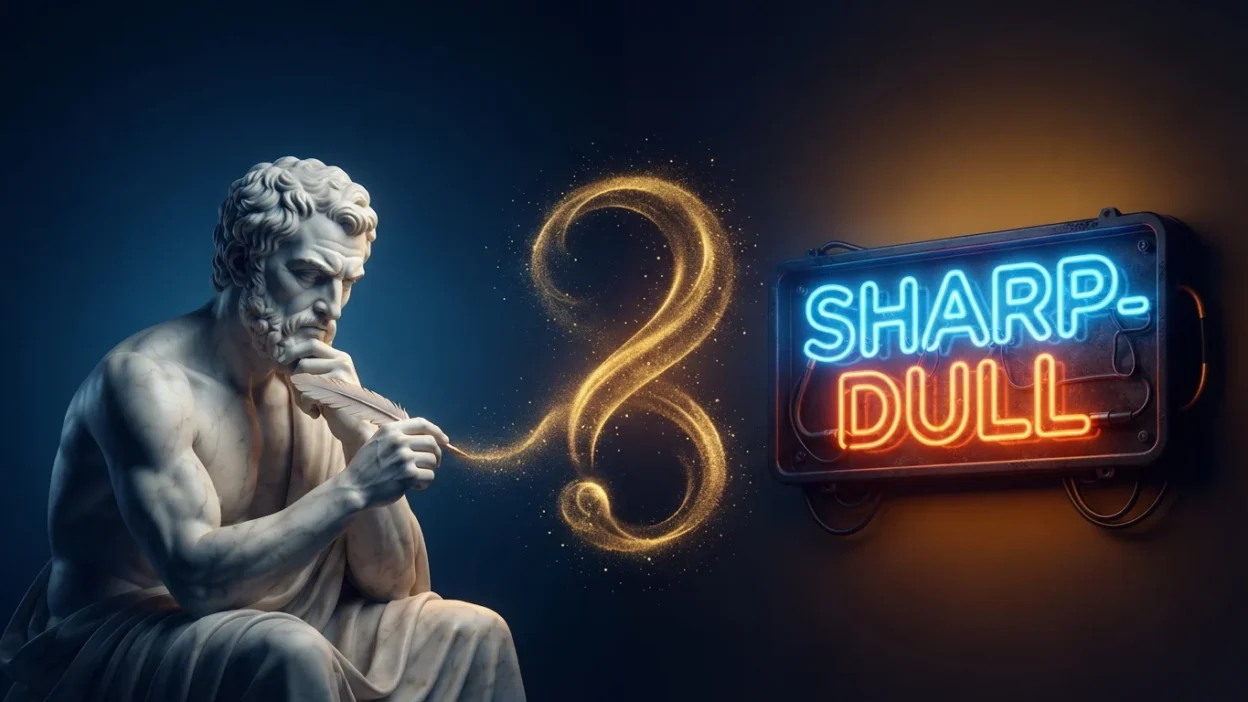
30. Sharp-Dull Combination
Meaning: A pairing of directly opposing qualities.
Example: “The phrase ‘deafening silence’ is a sharp-dull combination.”
Usage: Explaining the literal meaning of oxymoron (from Greek, “sharp-dull”) .
Comparison Table: When to Use Different Oxymoron Synonyms
| Synonym | Best For | Tone | Difficulty |
|---|---|---|---|
| Paradox | Deep truths and philosophical insights | Serious | Medium |
| Contradiction | Everyday inconsistencies | Neutral | Easy |
| Incongruity | Mismatches causing humor or unease | Light | Easy |
| Juxtaposition | Art, design, and creative analysis | Analytical | Medium |
| Antinomy | Philosophical debates | Formal | Hard |
| Irony | Unexpected twists and situations | Witty | Easy |
| Non Sequitur | Illogical conversation or logic | Humorous | Medium |
| Enantiosis | Literary rhetoric | Academic | Hard |
How to Choose the Right Oxymoron Synonym
Selecting the perfect synonym depends on the context, audience, and purpose. Here’s a practical guide:
For Philosophical or Deep Discussions
Choose paradox, antinomy, or contrariety. These terms suggest underlying complexity rather than simple opposition. Use them when exploring ideas like free will, ethics, or existential questions.
Example: “The paradox of choice suggests that more options lead to less satisfaction.”
For Literary and Creative Writing
Use juxtaposition, figure of speech, or trope. These terms focus on the artistic or stylistic element of contradictions.
Example: “Dickens uses juxtaposition to highlight social inequality.”
For Everyday Situations
Go with contradiction, inconsistency, or discrepancy. These are accessible terms that people understand immediately.
Example: “There was a contradiction in the report that we need to resolve.”
For Humorous Contexts
Select absurdity, mismatch, or non sequitur. These lighthearted terms work well in comedy or casual conversation.
Example: “His non sequitur about pineapple pizza left everyone confused.”
For Academic or Formal Writing
Use antilogy, enantiosis, or contrariety. These precise terms demonstrate depth of knowledge.
Example: “The theologian explored the antilogy between divine justice and mercy.”
Understanding the Nuances: Oxymoron vs. Paradox
Many people confuse oxymoron synonyms like “paradox” and “contradiction.” Here’s the distinction:
An oxymoron is a figure of speech combining two contradictory terms in a short phrase . Think “deafening silence” or “bittersweet.”
A paradox is a statement that seems contradictory but may reveal a truth. For example, “The more you know, the more you realize you don’t know.”
A contradiction is simply a direct opposition between ideas, without the rhetorical flourish.
Understanding these differences helps you choose the right oxymoron synonym for your purpose.
Why Learning Oxymoron Synonyms Matters
Expanding your vocabulary with oxymoron synonyms offers several benefits:
1. Enhanced Writing: Knowing multiple synonyms adds variety to your writing . Instead of repeating “oxymoron” endlessly, you can use “paradoxical pairing” or “contrary expression.”
2. Clearer Communication: Different contexts call for different terms. Using the right synonym makes you more precise and credible.
3. Deeper Understanding: Exploring these terms deepens your appreciation of language, logic, and rhetoric.
4. Academic Success: Students encountering literary criticism or philosophy benefit from a strong grasp of these concepts.
Example Sentences in Different Contexts
Let’s see how different oxymoron synonyms work in real writing:
Academic:
“The antinomy between scientific progress and environmental preservation is increasingly apparent.”
Creative:
“The poet’s juxtaposition of light and shadow in the sonnet creates a sense of conflict.”
Everyday:
“Her calm tone was a contradiction of her nervous gestures.”
Humorous:
“The absurdity of calling it ‘alone together’ made everyone laugh.”
Business:
“The discrepancy between our sales targets and actual performance was concerning.”
Advanced Oxymoron Synonyms for Sophisticated Writing
For advanced learners and professionals, here are three sophisticated synonyms worth mastering:
Catachresis
A strained or improper use of words, often involving contradiction .
Example: “The writer’s catachresis combined ‘hard’ and ‘soft’ in ways that confused readers.”
Acutifatuum
A rare Latin-derived term meaning “pointedly foolish” (etymologically similar to oxymoron) .
Example: “His argument was an acutifatuum—impressive on the surface but illogical.”
Self-Contradiction
A statement or idea that contradicts itself.
Example: “The politician’s self-contradiction cost him credibility.”
Common Mistakes to Avoid
1. Using “paradox” for simple contradictions. A paradox implies hidden truth, not just opposition.
2. Overusing “irony.” Irony is about unexpected outcomes, not about contradictory terms.
3. Confusing “juxtaposition” with “oxymoron.” Juxtaposition is broader—it can involve images, characters, or entire scenes, not just words.
4. Forgetting the context. The best synonym depends heavily on the situation.
Conclusion
Mastering oxymoron synonyms like paradox, contradiction, incongruity, juxtaposition, and antinomy helps you describe contradictory concepts with precision and style.
Whether you’re a student analyzing literature, a writer crafting compelling prose, an ESL learner expanding vocabulary, or a content creator seeking varied expression, understanding these terms enhances your linguistic toolkit.
Remember:
- Paradox reveals hidden truth
- Contradiction points out direct opposition
- Juxtaposition places opposites side-by-side
- Incongruity highlights mismatches
- Irony concerns unexpected outcomes
By choosing the right synonym for the right context, you’ll communicate more effectively and sound more sophisticated.
Start using these terms in your daily writing and speaking. Listen to conversations and notice how people describe contradictions. Practice with examples like “deafening silence,” “bittersweet,” and “living dead.”
The English language is rich with expressive possibilities and understanding oxymoron synonyms unlocks a powerful dimension of communication.

David Henry is a language enthusiast and content writer specializing in synonyms, vocabulary, and word meanings. He creates clear, engaging resources that help readers improve their writing, communication, and English skills.