
You have probably seen the word dike while reading about floods, and then noticed dyke somewhere else. Are they the same thing, or two completely different words? This is one of those confusing spelling situations in English where the answer depends entirely on where you are and what you are talking about.
The confusion is real because both spellings exist, both are correct in certain situations, and one of them carries a completely separate meaning that has nothing to do with water or walls. If you have ever wondered whether you should write “dike” or “dyke” in your essay or assignment, you are in the right place. This guide will walk you through both spellings, explain the differences clearly, and give you practical examples so you never mix them up again.
Quick Answer
Dike is the standard American spelling for a wall or embankment that holds back water. Dyke is the British and Commonwealth spelling for the same structure, but it is also a slang term for a lesbian. In American English, dike is preferred for the water barrier.
Why People Confuse Dike and Dyke
Both words sound exactly the same. They are pronounced /daɪk/ to rhyme with “bike” or “like.” That shared pronunciation is the root of most confusion.
The two spellings have existed side by side for centuries. In older English texts, writers did not always recognize a distinction between them. Over time, different regions developed preferences. American English settled on dike for the flood barrier, while British and Commonwealth English favoured dyke.
Then there is the other meaning. Dyke has been used since the 1930s as a slang term for a lesbian, often in a derogatory way, though many lesbians have reclaimed it as a positive identity label. This means the spelling you choose can accidentally change your meaning in ways you did not intend.
The First Word: Dike
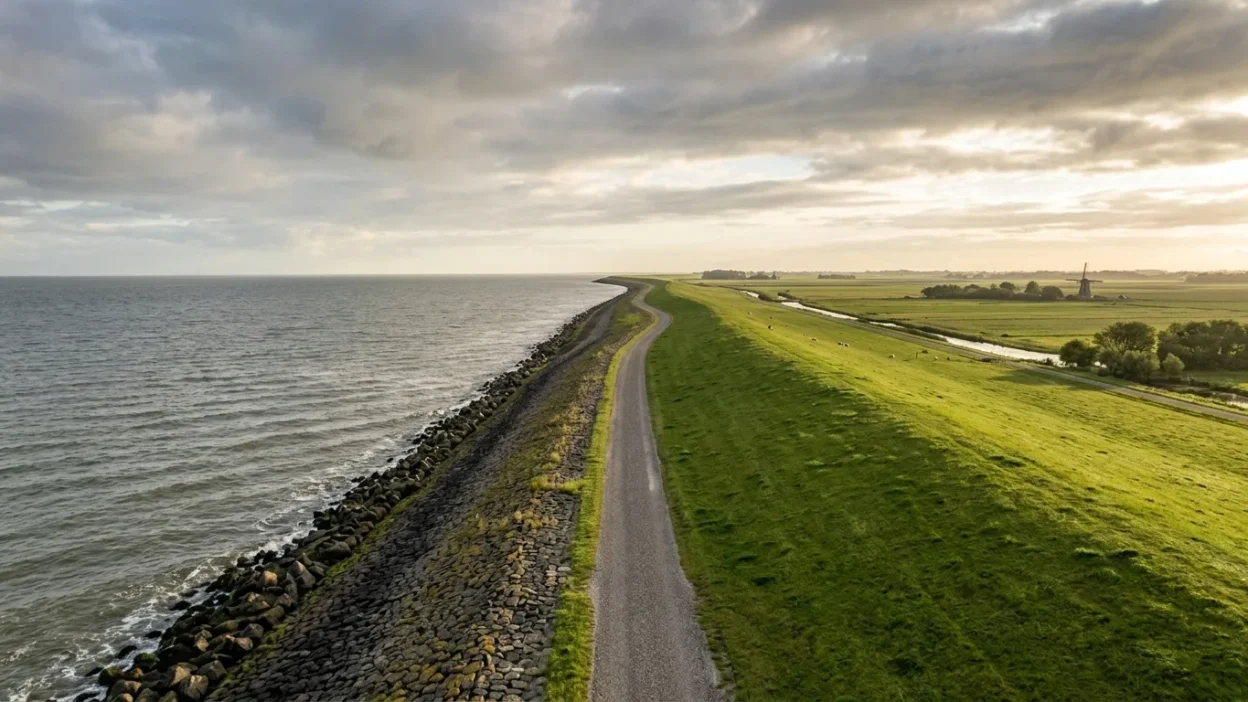
Dike is a noun and a verb. As a noun, it refers to a barrier built to control or hold back water. This barrier is usually made of earth and runs alongside a river or coastline. The purpose is simple: keep water where it belongs and protect nearby land from flooding.
The word comes from Old English dīc, which originally meant “trench” or “ditch.” Over centuries, the meaning shifted from the hole itself to the bank of earth dug out of that hole. That is why a dike can refer to both a ditch and the wall beside it, depending on context.
As a verb, dike means to protect or surround something with a dike, or to drain an area using ditches.
The Second Word: Dyke
Dyke is the same water barrier, just spelled differently. It is the preferred spelling in British English, Australian English, and other Commonwealth varieties. If you are reading a British newspaper about flood defences, you will almost certainly see dyke.
In Scottish English, dyke has an additional meaning: a dry-stone wall that divides or encloses land. This usage is specific to Scotland and parts of northern England.
The word dyke also carries that separate slang meaning mentioned earlier. Context is everything here. A sentence like “They built a dyke to protect the village” is clearly about flood control. A sentence using the word as a personal descriptor is operating in a completely different register.
Dike vs Dyke: Comparison Table
| Feature | Dike | Dyke |
|---|---|---|
| Primary meaning | Water barrier (embankment) | Water barrier (embankment) |
| Regional preference | American English | British/Commonwealth English |
| Scottish usage | Rare | Dry-stone wall |
| Slang meaning | Not typically used this way | Slang for lesbian (often offensive) |
| Geology | Igneous rock intrusion | Same (variant spelling) |
| Pronunciation | /daɪk/ | /daɪk/ |
When to Use Each Spelling
Use “dike” when:
- You are writing for an American audience
- You are following American English style guides
- You want to avoid any ambiguity with the slang meaning
Use “dyke” when:
- You are writing for a British or Commonwealth audience
- You are specifically discussing Scottish dry-stone walls
- You are quoting British sources that use that spelling
For students and ESL learners, the safest approach is to use dike for the water barrier unless your teacher or style guide specifies otherwise. It is the spelling you will encounter most often in American textbooks and international scientific writing.
10+ Examples in Context
- The Netherlands is famous for its extensive system of dikes that keep the sea at bay.
- Workers reinforced the dike with sandbags before the storm arrived.
- The river overflowed its banks and breached the dyke near the village.
- A narrow dike ran alongside the canal, separating the water from the farmland.
- The ancient Romans built dikes to control flooding in the lowlands.
- In Scotland, a dyke often refers to a stone wall dividing fields.
- The geological survey mapped a dike of igneous rock cutting through the sedimentary layers.
- He spent the summer diking the fields to prevent water damage.
- The dyke held strong despite days of heavy rain.
- Engineers inspected the dike for cracks and erosion.
- The dike provided a walking path as well as flood protection.
- Farmers diked the marshland to create usable agricultural fields.
Common Mistakes to Avoid
Mistake 1: Using “dike” in British writing.
British readers expect dyke for flood defences. Using the American spelling is not wrong, but it may look inconsistent in a British context.
Mistake 2: Accidentally using the slang meaning.
If you write “dyke” in a sentence where the context is unclear, readers might misinterpret it. This is especially important in academic writing.
Mistake 3: Assuming they are always interchangeable.
In American English, dike is standard. In British English, dyke is standard. They are not freely interchangeable if you want to match regional conventions.
Mistake 4: Confusing dike with dam.
A dike usually runs parallel to water to prevent flooding. A dam blocks water to create a reservoir. They serve different purposes.
Memory Trick
Remember this simple rule: Dike for the States, Dyke for the Brits.
Think of the letter I in dike standing for “Individual American spelling.” The letter Y in dyke stands for “Yonder across the ocean in Britain.”
You can also remember that dike looks cleaner and simpler, matching the straightforward American approach to spelling.
American vs British English
| American English | British English |
|---|---|
| dike | dyke |
| levee (also common) | embankment |
| ditch | ditch |
In American English, levee is actually the more common term for a flood barrier along a river. Dike is still understood and used, especially for coastal defences. British English uses dyke for both river and coastal barriers.
Similar Words
Levee: An embankment built to prevent river flooding. More common in American English than dike.
Dam: A barrier that blocks water flow, usually to create a reservoir or generate power.
Embankment: A raised bank of earth or stone. This is a broader term that includes dikes but also covers railway embankments and other raised structures.
Ditch: A narrow channel dug into the ground for drainage. Interestingly, dike and ditch share the same Old English root.
Causeway: A raised road or path across low or wet ground. This can sometimes function like a dike.
Final Verdict
Use dike in American English. Use dyke in British and Commonwealth English. Both refer to the same type of water barrier. Be aware that dyke carries an additional slang meaning that dike does not, so context matters. For students and international writers, dike is the safer default unless you are specifically following British conventions.
Frequently Asked Questions
Is “dike” or “dyke” more common?
In American English, dike is more common for the water barrier. In British English, dyke is standard. Globally, both appear, but American influence in scientific and technical writing has made dike more widespread.
What is a dike in simple terms?
A dike is a wall or bank of earth built to stop water from flooding land. Think of it as a barrier between water and the places where people live or farm.
Is “dyke” a bad word?
Dyke has two meanings. As a flood barrier, it is completely neutral. As a slang term for a lesbian, it has historically been offensive, though some lesbians have reclaimed it as a positive identity term. Context determines which meaning applies.
What is the difference between a dike and a levee?
They are similar structures. A levee is typically an embankment along a river to prevent flooding. A dike can also be along a river, but the term is often used for coastal barriers as well. American English prefers levee for river flood control.
Can “dike” be a verb?
Yes. To dike means to protect or surround an area with a dike, or to drain land using ditches.
What does dike mean in geology?
In geology, a dike (or dyke) is a sheet of igneous rock that formed in a crack within older rock. It is a vertical or near-vertical intrusion of magma that hardened underground.
How do you pronounce dike and dyke?
Both are pronounced /daɪk/, rhyming with “bike” or “like.”
Is “put your finger in the dike” an idiom?
Yes. It comes from a Dutch story about a boy who plugged a leaking dike with his finger. Today it means making a small effort to prevent a bigger problem.
Remember This
Dike for American English. Dyke for British and Commonwealth English. Both mean a water barrier, but dyke has an additional slang meaning that requires careful context. When in doubt, dike is the safer choice for international and academic writing.
Conclusion
The dike vs dyke question comes down to regional spelling conventions. American English uses dike for the embankment that holds back water. British and Commonwealth English uses dyke. Both spellings are correct in their respective regions. The key thing to remember is that dyke carries a second meaning as a slang term, so context matters when you use that spelling.
For students and ESL learners, the practical takeaway is simple: use dike unless you have a specific reason to use dyke, such as following British style guidelines or discussing Scottish stone walls. This keeps your writing clear and avoids accidental confusion. Now you can read about flood defences, write about them, and know exactly which spelling to choose.

David Henry is a language enthusiast and content writer specializing in synonyms, vocabulary, and word meanings. He creates clear, engaging resources that help readers improve their writing, communication, and English skills.