Have you ever struggled to find the perfect word to describe a strange, unsettling feeling? You might reach for “scary” or “creepy,” but the English language offers a treasure trove of spooky synonyms that can add color, precision, and nuance to your writing or speech. Whether you’re a student crafting a Halloween story, an ESL learner expanding your vocabulary, or a writer aiming for atmospheric perfection, understanding these words will transform your descriptions.
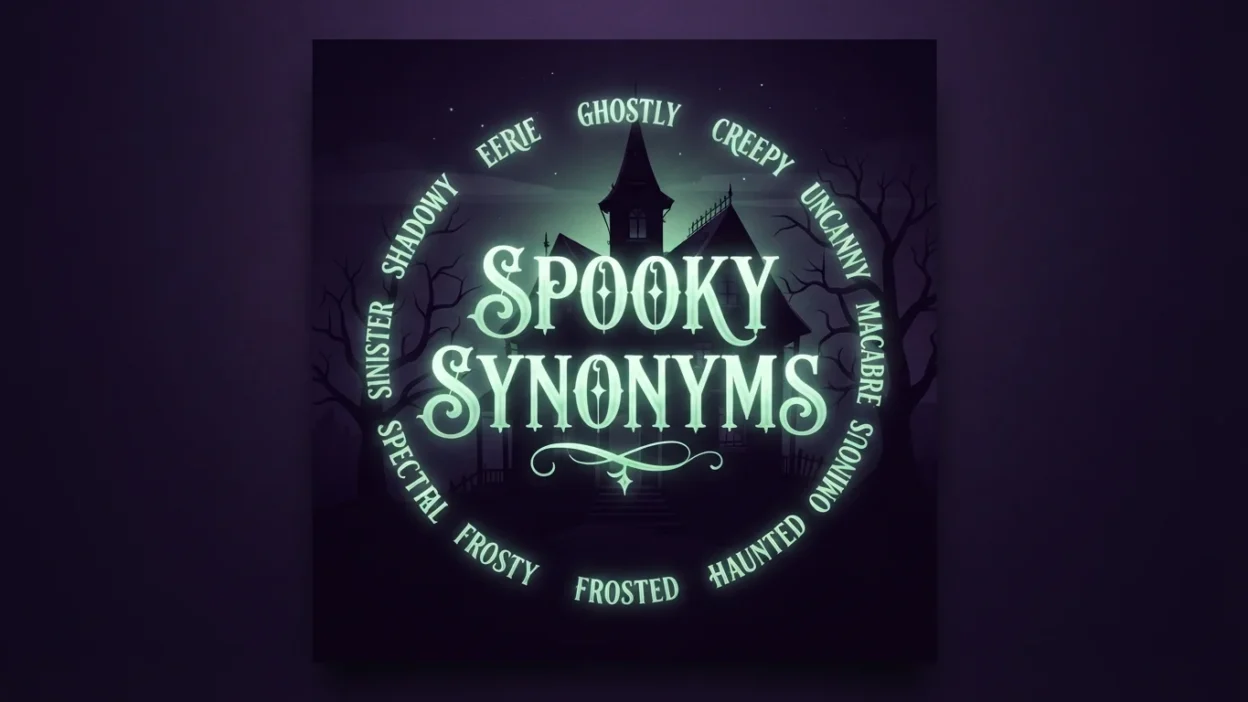
The word “spooky” itself is a fantastic, catchall term for things that inspire fear or unease in a supernatural way. However, using the same word repeatedly can make your language feel flat. That’s where exploring spooky synonyms becomes invaluable. It allows you to paint a more vivid picture, from the “eerie” silence of an abandoned house to the “uncanny” feeling of déjà vu. In this guide, we’ll explore 30 powerful alternatives to “spooky,” ensuring you’re never at a loss for the right word for a ghostly, mysterious, or unsettling scene .
What Does “Demure” Mean? A Beginner’s Guide
Before we dive into the world of spooky vocabulary, let’s clarify a term that might be confused with it. The word “demure” is an adjective used to describe someone who is quiet, modest, and reserved . A demure person is often polite and a little shy, not drawing attention to themselves. Think of a character in a classic novel who gives a small, quiet smile instead of laughing loudly.
Tone and Usage Context: The tone of “demure” is generally positive or neutral, suggesting grace and modesty. It can be used to describe a person’s behavior (“She gave a demure reply”), a style of dress (“A demure, high-necked dress”), or even a mannerism (“A demure smile”) . It’s a good word for creating a character who is gentle, well-mannered, and unassuming .
30 Synonyms for Demure
This list of “demure” synonyms will help you add nuance to your descriptions of quiet, modest, or reserved people and things.
1. Modest
- Meaning: Humble, not bragging about your abilities or achievements.
- Example: “Despite winning the award, she remained modest.”
- Best Context: General, positive description of a humble person .
2. Reserved
- Meaning: Quiet and not showing your feelings or thoughts easily.
- Example: “He was a reserved man, preferring to listen rather than talk.”
- Best Context: Describing someone who is private and keeps to themselves .
3. Shy
- Meaning: Nervous and uncomfortable around other people.
- Example: “The shy child hid behind her mother’s leg.”
- Best Context: Describing someone who feels anxious or timid socially .
4. Retiring
- Meaning: Shy and avoiding being in social situations.
- Example: “After a long career, he led a quiet, retiring life in the country.”
- Best Context: Describing a very private, almost reclusive person .
5. Meek
- Meaning: Quiet, gentle, and easily persuaded; not assertive.
- Example: “He was a meek man, always agreeing with others to avoid conflict.”
- Best Context: Describing someone who is humble to the point of being timid .
6. Bashful
- Meaning: Shy, easily embarrassed, and not confident around others.
- Example: “She gave a bashful smile when she received the compliment.”
- Best Context: Describing someone who becomes shy when receiving attention .
7. Coy
- Meaning: Pretending to be shy or modest, often in a playful way to attract attention.
- Example: “He was being coy about his new girlfriend, not giving us any details.”
- Best Context: Playful or flirtatious contexts, when someone is playfully secretive .
8. Unassuming
- Meaning: Not wanting to be noticed or seen as important; modest.
- Example: “The famous author was surprisingly unassuming, chatting with fans as if they were old friends.”
- Best Context: Describing a powerful or important person who acts very humbly .
9. Sedate
- Meaning: Calm, quiet, and unhurried.
- Example: “They enjoyed a sedate evening at home, reading by the fire.”
- Best Context: Describing a peaceful, slow-paced atmosphere or person .
10. Decorous
- Meaning: Behaving in a proper, polite, and socially acceptable way.
- Example: “The children were praised for their decorous behavior at the formal dinner.”
- Best Context: Formal settings like ceremonies or meetings .
11. Prim
- Meaning: Very formal and proper, often in a way that seems old-fashioned or easily offended.
- Example: “The prim librarian insisted on absolute silence.”
- Best Context: Describing someone who is very strict about manners, sometimes to an extreme .
12. Sober
- Meaning: Serious, calm, and not showing much emotion.
- Example: “He adopted a sober expression for the important meeting.”
- Best Context: Formal or serious situations .
13. Reticent
- Meaning: Not willing to speak or tell people things; reserved.
- Example: “She was reticent about her past, changing the subject whenever it came up.”
- Best Context: Describing someone who is silent or private about a particular topic .
14. Quiet
- Meaning: Making very little noise; not talking much.
- Example: “He was a quiet boy who spent most of his time reading.”
- Best Context: Simple, everyday descriptions .
15. Serious
- Meaning: Thoughtful and not silly; grave.
- Example: “Her serious demeanor made her seem older than she was.”
- Best Context: Describing someone who is thoughtful or not prone to frivolity .
16. Diffident
- Meaning: Lacking confidence; shy and unsure of yourself.
- Example: “He gave a diffident answer, unsure if it was correct.”
- Best Context: Describing a lack of self-confidence .
17. Humble
- Meaning: Modest; thinking you are not more important than others.
- Example: “He came from humble beginnings but achieved great success.”
- Best Context: Describing a person’s attitude or background .
18. Self-effacing
- Meaning: Not wanting to be noticed; acting modestly.
- Example: “The self-effacing professor never mentioned his many achievements.”
- Best Context: Describing someone who purposely avoids attention.
19. Constrained
- Meaning: Behaving in a forced or unnatural way because you are nervous or shy.
- Example: “Her voice was constrained, as if she was afraid to speak loudly.”
- Best Context: Describing behavior that is stiff due to shyness.
20. Formal
- Meaning: Very correct and suitable for official or important occasions.
- Example: “Their relationship was quite formal and they addressed each other by their titles.”
- Best Context: Professional or official interactions.
21. Grave
- Meaning: Serious and solemn; giving the impression of being worried or important.
- Example: “His face was grave as he delivered the news.”
- Best Context: Serious and often sad situations .
22. Solemn
- Meaning: Serious and dignified; not happy or cheerful.
- Example: “The wedding ceremony was a beautiful and solemn occasion.”
- Best Context: Ceremonial, serious, or religious events .
23. Staid
- Meaning: Serious, old-fashioned, and boringly conventional.
- Example: “The staid old bank had an air of unchanging tradition.”
- Best Context: Describing institutions or people who are very traditional .
24. Prudish
- Meaning: Easily shocked by rude or sexual things; very proper.
- Example: “His prudish aunt was shocked by the movie.”
- Best Context: Describing someone who is overly proper and easily offended.
25. Old-maidish
- Meaning: Very prim and proper; resembling a stereotype of an old unmarried woman.
- Example: “She had an old-maidish way of arranging her teacups.”
- Best Context: Describing fussy, overly proper behavior (can be offensive, use carefully).
26. Mousy
- Meaning: Quiet and shy, and not interesting.
- Example: “A mousy woman sat in the corner, not speaking to anyone.”
- Best Context: Describing someone who is shy to the point of being unnoticeable.
27. Unassertive
- Meaning: Not confidently stating what you want or think.
- Example: “He was too unassertive to ask for a promotion.”
- Best Context: Describing someone who avoids stating their opinions or needs.
28. Timid
- Meaning: Lacking courage or confidence; easily frightened.
- Example: “The timid deer ran off at the first sound.”
- Best Context: Describing people or animals who are easily scared .
29. Demure (Itself)
- Meaning: Characterized by shyness and modesty; reserved.
- Example: “Her demure appearance hid her sharp sense of humor.”
- Best Context: When you want to use the exact, classic meaning .
30. Overmodest
- Meaning: Excessively modest; pretending to be more humble than you are.
- Example: “His overmodest refusal of the award seemed insincere.”
- Best Context: When modesty seems fake or extreme .
Spooky Vocabulary vs. Demure Vocabulary
A quick comparison table to understand the difference between the tones:
| Spooky Synonyms (Eerie, Mysterious) | Demure Synonyms (Quiet, Modest) |
|---|---|
| Eerie | Modest |
| Frightening | Reserved |
| Ghostly | Shy |
| Weird | Bashful |
| Uncanny | Meek |
| Creepy | Coy |
| Supernatural | Sedate |
| Mysterious | Prim |
How to Choose the Right Synonym
Choosing the perfect word can be tricky, but grouping them by intent or tone makes it simpler.
- For a genuinely modest and shy person: Use modest, reserved, bashful, or unassuming. These words are positive and gentle.
- For a quiet person in a formal setting: Use sedate, decorous, or sober. These words suggest calmness and propriety.
- For a person who is overly proper: Use prim, prudish, or staid. These words have a slightly negative connotation, suggesting a lack of warmth or a rigid personality.
- For a person who is playfully modest: Use coy. It implies a cheeky, knowing kind of shyness .
Conclusion
Expanding your vocabulary with synonyms is like adding more colors to your palette as an artist. Understanding and using spooky synonyms for a mystery story, and “demure” synonyms for character descriptions, will make your communication more precise, engaging, and vivid. if you’re telling a ghost story, writing a professional profile, or just trying to express yourself more clearly, the power of choosing the right word cannot be overstated. Start by trying out just a couple of these new words in your next conversation or piece of writing, and you’ll see the difference they make.

Daniel Jack is a language enthusiast and content writer who specializes in synonyms, vocabulary, and word meanings. He creates clear, engaging resources that help readers improve communication and expand their English skills.