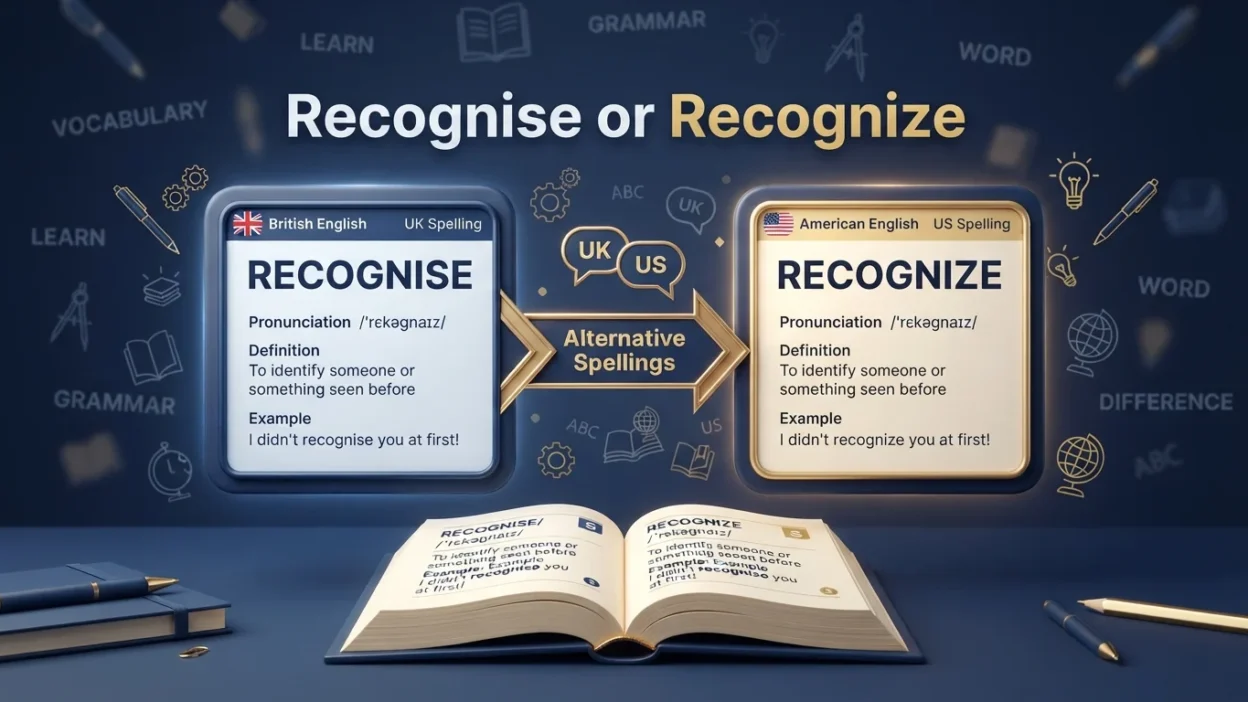
If you are wondering if “recognise” or “recognize” is correct, the answer is: both spellings ar if e correct. The difference is mainly based on the variety of English being used. Recognize is the standard spelling in American English, while recognise is widely used in British English and many other varieties influenced by British English.
Both words have exactly the same meaning: to identify someone or something because you have seen, known, or experienced it before. They can also mean to understand, acknowledge, or officially accept something. For example, “I recognize her voice” and “I recognise her voice” mean the same thing.
Quick Answer
Recognize is the usual American English spelling, while recognise is the usual British English spelling. Both are correct and have the same pronunciation and meaning. Use recognize for American audiences and recognise for British English. The important thing is to remain consistent throughout your writing.
Why Do People Confuse “Recognise” and “Recognize”?
The confusion comes from the spelling difference between American and British English.
The word comes from Latin recognoscere and entered English through French. Over time, different English-speaking regions developed different spelling conventions.
The main difference is the ending:
- recognise → -ise
- recognize → -ize
This same pattern appears in several other words:
- organise / organize
- apologise / apologize
- realise / realize
- analyse / analyze
- specialise / specialize
Although the spelling changes, the meaning generally does not.
Recognise: Meaning and Usage
Recognise is a standard spelling in British English.
It means to identify someone or something, understand something clearly, acknowledge something, or officially accept something.
Examples
- I recognise that voice.
- She recognised him immediately.
- The company recognises the importance of good communication.
- The government recognised the new organization.
The spelling recognise is common in British English and is also used in many countries where British English conventions are followed.
Recognize: Meaning and Usage
Recognize is the standard spelling in American English.
It has the same meanings as recognise:
- to identify someone or something
- to understand or acknowledge something
- to accept something as valid
- to officially acknowledge something
Examples
- I recognize that voice.
- She recognized him immediately.
- The company recognizes the importance of good communication.
- The government recognized the new organization.
So, there is no difference in meaning between recognise and recognize.
Recognise vs Recognize: Comparison Table
| Feature | Recognise | Recognize |
|---|---|---|
| Main variety | British English | American English |
| Meaning | Same | Same |
| Pronunciation | Same | Same |
| Spelling | -ise | -ize |
| Example | I recognise him. | I recognize him. |
| Common in | UK and many British-English contexts | United States |
| Correct? | Yes | Yes |
When Should You Use “Recognise” or “Recognize”?
Use “Recognise” in British English
Choose recognise when you are writing primarily for readers who use British English.
For example:
The teacher recognised the student’s effort.
You may also see this spelling in educational materials, publications, and official writing that follows British spelling conventions.
Use “Recognize” in American English
Choose recognize when writing for an American audience.
For example:
The teacher recognized the student’s effort.
This is the standard American spelling.
What About International English?
If you are writing for an international audience, either spelling can work. However, consistency is important.
If you choose British spelling, use forms such as:
- recognise
- organise
- realise
- apologise
If you choose American spelling, use:
- recognize
- organize
- realize
- apologize
Avoid switching randomly between the two systems.
12 Examples of Recognise and Recognize
Here are examples showing that the two spellings have the same meaning:
- British: I recognise that man.
American: I recognize that man. - British: She recognised my voice.
American: She recognized my voice. - British: Do you recognise this building?
American: Do you recognize this building? - British: He recognised his mistake.
American: He recognized his mistake. - British: We recognise the importance of education.
American: We recognize the importance of education. - British: The company recognises her achievements.
American: The company recognizes her achievements. - British: I immediately recognised the song.
American: I immediately recognized the song. - British: They recognised the need for change.
American: They recognized the need for change. - British: The award recognises outstanding work.
American: The award recognizes outstanding work. - British: She was unable to recognise him in the dark.
American: She was unable to recognize him in the dark. - British: The country recognised the new government.
American: The country recognized the new government. - British: I recognise that this is a difficult situation.
American: I recognize that this is a difficult situation.
Common Mistakes
Mistake 1: Thinking one spelling is wrong
It is incorrect to assume that recognise is always wrong or that recognize is always wrong.
Both are accepted spellings.
Mistake 2: Mixing spelling systems
A common writing problem is using British and American spellings inconsistently.
For example:
The company recognises the problem and organizes a meeting.
This mixes British recognises with American organizes.
A consistent British version would be:
The company recognises the problem and organises a meeting.
An American version would be:
The company recognizes the problem and organizes a meeting.
Mistake 3: Assuming pronunciation changes
The spelling changes, but the pronunciation does not normally change simply because you use recognise instead of recognize.
Memory Trick
A simple way to remember the difference is:
Recognise = British
Recognize = American
You can also remember the spelling pattern:
British English often uses -ise
American English usually uses -ize
For example:
organise → organize
realise → realize
recognise → recognize
American vs British English
The most useful distinction is regional spelling.
American English
American English normally uses recognize.
Examples:
- recognize
- organize
- realize
- apologize
- emphasize
British English
British English commonly uses recognise.
Examples:
- recognise
- organise
- realise
- apologise
- emphasise
There is an important detail, however: British English does also use -ize spellings in some contexts. The -ise form is especially common in British usage, while -ize is also an established British spelling convention. Therefore, the simple rule is useful for everyday writing, but British spelling is not universally limited to -ise.
Similar Words
Several English words have similar spelling differences between American and British English:
| British English | American English |
|---|---|
| recognise | recognize |
| organise | organize |
| realise | realize |
| apologise | apologize |
| emphasise | emphasize |
| specialise | specialize |
| analyse | analyze |
Some other differences involve different letters rather than -ise/-ize:
- colour / color
- favourite / favorite
- centre / center
- travelled / traveled
- defence / defense
Final Verdict
Recognise and recognize are both correct.
The main difference is spelling convention:
- Recognise is commonly associated with British English.
- Recognize is standard in American English.
Both words mean the same thing, are pronounced the same way, and can be used in the same grammatical situations.
If you are writing for an American audience, choose recognize. If you are following British spelling conventions, recognise is a natural choice. Most importantly, keep your spelling consistent throughout the same piece of writing.
Frequently Asked Questions
Is “recognise” or “recognize” correct?
Both recognise and recognize are correct. Recognise is commonly used in British English, while recognize is the standard American English spelling.
Is “recognise” British or American?
Recognise is most commonly associated with British English. It is also used in many other varieties of English that follow British spelling conventions.
Is “recognize” American English?
Yes. Recognize is the standard spelling in American English.
Do “recognise” and “recognize” mean the same thing?
Yes. They have the same meaning and pronunciation. The difference is primarily a spelling and regional usage difference.
Which spelling should I use in an American essay?
Use recognize if your essay follows American English spelling conventions.
Which spelling should I use in British English?
Recognise is a common British spelling. However, recognize is also an established spelling in British English, so the choice can depend on the style guide you are following.
Is “recognise” pronounced differently from “recognize”?
No. The spelling difference does not normally create a difference in pronunciation.
Can I use both spellings in the same document?
It is better to choose one spelling convention and use it consistently. Mixing British and American spelling can make your writing look inconsistent.
Remember This
Recognise = commonly British English
Recognize = American English
Both are correct, and both mean to identify, acknowledge, or understand something.
Conclusion
The choice between recognise and recognize depends mainly on the variety of English you are using. Recognize is the standard American spelling, while recognise is widely used in British English. Neither spelling is inherently more correct than the other.
When writing, think about your audience and follow the spelling convention consistently. If you are writing in American English, use recognize; if you are following British English conventions, recognise is a natural choice. Once you remember the regional difference, this spelling question becomes much easier.

David Henry is a language enthusiast and content writer specializing in synonyms, vocabulary, and word meanings. He creates clear, engaging resources that help readers improve their writing, communication, and English skills.