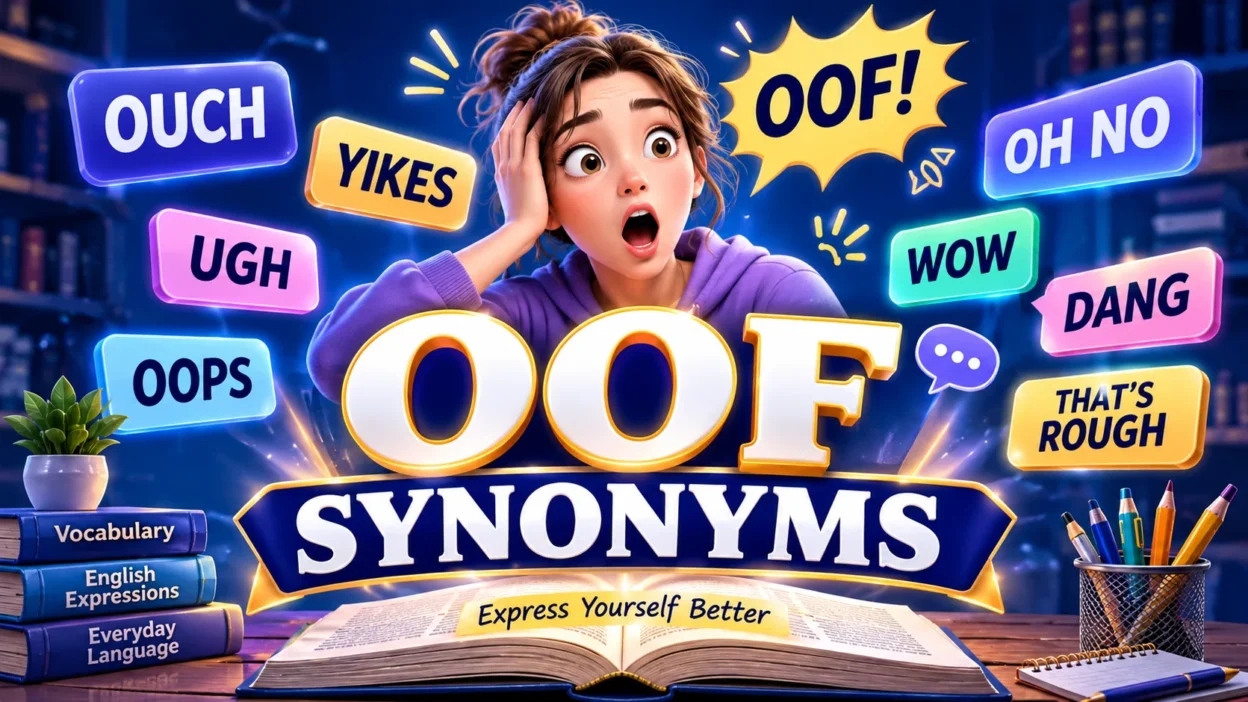
The word “oof” is a short, informal expression used to show a reaction to something painful, awkward, surprising, disappointing, or difficult. You might say “oof” after hearing bad news, watching someone make a mistake, experiencing physical discomfort, or seeing an uncomfortable situation.
Because “oof” is highly conversational, it does not always fit formal writing. Learning oof synonyms can help students, ESL learners, writers, and content creators express the same feeling with greater accuracy. Depending on the situation, you might choose words such as ouch, yikes, alas, unfortunately, or ouch instead.
The best alternative depends on the emotion you want to communicate. Some expressions sound humorous and casual, while others are more serious, sympathetic, or appropriate for formal writing.
What Does “Oof” Mean?
Oof is an informal interjection used when reacting to something unpleasant, painful, awkward, embarrassing, difficult, or unfortunate.
Examples
- Physical pain: “Oof, that hurt!”
- Bad news: “Oof, that’s a tough situation.”
- Awkward moment: “Oof, that conversation was uncomfortable.”
- Mistake: “Oof, I definitely chose the wrong answer.”
- Surprise: “Oof, that’s more expensive than I expected.”
The tone of “oof” is usually casual, conversational, and emotional. It is common in texting, social media, gaming, online conversations, and informal speech.
30 Oof Synonyms and Related Expressions
Since “oof” can communicate several different emotions, there is no single perfect synonym. The following alternatives are grouped according to the feeling you want to express.
1. Ouch
Meaning: A reaction to physical or emotional pain.
Example: “Ouch, that really hurt.”
Best usage: Physical pain, injury, or an emotionally painful situation.
2. Ow
Meaning: A short expression of sudden pain.
Example: “Ow! I hit my elbow on the table.”
Best usage: Immediate physical discomfort.
3. Yikes
Meaning: An expression of alarm, surprise, concern, or discomfort.
Example: “Yikes, that was a close call.”
Best usage: Awkward, worrying, surprising, or alarming situations.
4. Whoa
Meaning: An expression showing strong surprise or amazement.
Example: “Whoa, that was an incredible performance.”
Best usage: Unexpected or impressive situations.
5. Wow
Meaning: An expression of strong surprise, admiration, or shock.
Example: “Wow, I didn’t expect that result.”
Best usage: General surprise or amazement.
6. Ugh
Meaning: An expression of annoyance, frustration, disgust, or tiredness.
Example: “Ugh, I forgot my homework again.”
Best usage: Frustrating or unpleasant situations.
7. Oops
Meaning: An expression used after making a small mistake.
Example: “Oops, I sent the message to the wrong person.”
Best usage: Accidental mistakes and minor errors.
8. Oh no
Meaning: A simple expression of worry, disappointment, or concern.
Example: “Oh no, I think we missed the train.”
Best usage: Bad news, mistakes, or unfortunate events.
9. Oh dear
Meaning: A polite expression of concern or disappointment.
Example: “Oh dear, it looks like the project has been delayed.”
Best usage: Mild concern, especially in polite or traditional English.
10. Alas
Meaning: An expression of sadness, disappointment, or regret.
Example: “Alas, our plans were canceled.”
Best usage: Literary, formal, or dramatic writing.
11. Unfortunately
Meaning: Used to introduce something unfortunate or disappointing.
Example: “Unfortunately, the event was canceled.”
Best usage: Formal and professional writing.
12. Sadly
Meaning: Used to describe something disappointing, unfortunate, or sorrowful.
Example: “Sadly, the old building was demolished.”
Best usage: Serious or emotional situations.
13. Regrettably
Meaning: In a way that expresses regret about an unfortunate situation.
Example: “Regrettably, we cannot accept your application.”
Best usage: Formal, professional, and official communication.
14. Darn
Meaning: A mild expression of annoyance or disappointment.
Example: “Darn, I forgot my keys.”
Best usage: Mild frustration in casual speech.
15. Dang
Meaning: A mild expression of surprise, frustration, or disappointment.
Example: “Dang, that test was difficult.”
Best usage: Casual and family-friendly conversations.
16. Geez
Meaning: An expression of annoyance, surprise, or disbelief.
Example: “Geez, that was a loud noise.”
Best usage: Informal conversations.
17. Good grief
Meaning: An expression of surprise, frustration, or disbelief.
Example: “Good grief, how did we make such a big mistake?”
Best usage: Informal but expressive situations.
18. Jeez
Meaning: A casual expression of irritation, surprise, or disbelief.
Example: “Jeez, that was a difficult question.”
Best usage: Informal conversation and dialogue.
19. Shoot
Meaning: A mild expression of disappointment or frustration.
Example: “Shoot, I left my wallet at home.”
Best usage: Minor mistakes or unfortunate situations.
20. Rats
Meaning: An old-fashioned informal expression of disappointment.
Example: “Rats! I missed the last bus.”
Best usage: Lighthearted or humorous writing.
21. Blast
Meaning: A mild exclamation of annoyance or disappointment.
Example: “Blast! The computer stopped working.”
Best usage: Humorous, old-fashioned, or dramatic dialogue.
22. Ouchie
Meaning: A playful or childish way of referring to pain.
Example: “I got an ouchie on my knee.”
Best usage: Playful, humorous, or child-friendly contexts.
23. Yow
Meaning: An expressive reaction to sudden pain or surprise.
Example: “Yow! That was hotter than I expected.”
Best usage: Dramatic or playful reactions.
24. Eek
Meaning: A short expression of fear, alarm, or nervous surprise.
Example: “Eek! There’s a spider on the wall.”
Best usage: Fearful or startled reactions.
25. Gosh
Meaning: A mild expression of surprise or concern.
Example: “Gosh, that sounds difficult.”
Best usage: Polite and informal conversation.
26. Oh boy
Meaning: An expression showing anticipation, concern, surprise, or resignation.
Example: “Oh boy, this is going to be a long meeting.”
Best usage: Difficult or potentially troublesome situations.
27. That hurts
Meaning: A direct statement expressing physical or emotional pain.
Example: “That hurts more than I expected.”
Best usage: When you want to clearly describe pain.
28. That’s rough
Meaning: A sympathetic reaction to someone’s difficult experience.
Example: “You lost your job? That’s rough.”
Best usage: Showing empathy in casual conversation.
29. That’s unfortunate
Meaning: A polite way to acknowledge something disappointing or negative.
Example: “That’s unfortunate, but we can try again tomorrow.”
Best usage: Neutral, polite, and professional situations.
30. What a shame
Meaning: An expression of sympathy or disappointment about an unfortunate event.
Example: “What a shame that you couldn’t attend the ceremony.”
Best usage: Expressing sympathy or disappointment politely.
Oof Synonyms Comparison Table
| Expression | Main Feeling | Tone | Best Context |
|---|---|---|---|
| Ouch | Pain | Casual | Physical or emotional pain |
| Ow | Sudden pain | Casual | Immediate discomfort |
| Yikes | Alarm | Casual | Awkward or worrying situations |
| Ugh | Frustration | Casual | Annoyance or unpleasantness |
| Oops | Mistake | Casual | Small errors |
| Oh no | Concern | Neutral | Bad news or problems |
| Alas | Sadness | Formal/literary | Writing |
| Unfortunately | Disappointment | Formal | Professional writing |
| Sadly | Sorrow | Neutral | Serious situations |
| Regrettably | Regret | Formal | Official communication |
| That’s rough | Sympathy | Casual | Supporting someone |
| That’s unfortunate | Disappointment | Polite | Professional situations |
| What a shame | Sympathy | Neutral | Disappointing events |
How to Choose the Right Oof Synonym
Choosing the right alternative depends on what you are feeling and how formal the situation is.
For Physical Pain
Use:
- Ouch
- Ow
- Yow
- That hurts
Example:
“Ouch! I accidentally touched the hot pan.”
These expressions clearly communicate physical discomfort.
For Frustration
Use:
- Ugh
- Darn
- Dang
- Shoot
- Geez
Example:
“Ugh, my computer crashed before I saved the document.”
These are especially useful in casual conversations.
For Surprise or Alarm
Use:
- Yikes
- Whoa
- Wow
- Eek
- Gosh
Example:
“Yikes, that car nearly hit the fence!”
For Mistakes
Use:
- Oops
- Oh no
- Shoot
- Rats
Example:
“Oops, I accidentally deleted the file.”
For Sympathy
Use:
- That’s rough
- What a shame
- That’s unfortunate
- Sadly
Example:
“You couldn’t get the scholarship? That’s rough.”
For Formal Writing
Avoid using highly casual expressions such as “oof,” “ugh,” or “yikes” unless you are intentionally writing dialogue or conversational content.
Instead, consider:
- Unfortunately
- Regrettably
- Sadly
- That’s unfortunate
- What a shame
Example:
“Unfortunately, the application deadline has passed.”
Oof vs. Ouch: What’s the Difference?
Although oof and ouch can both follow painful experiences, they are not exactly the same.
Ouch usually refers directly to pain.
“Ouch! I hurt my finger.”
Oof is broader and can describe pain, difficulty, embarrassment, disappointment, or emotional discomfort.
“Oof, that interview question was difficult.”
Therefore, ouch is more strongly connected to pain, while oof has a wider emotional range.
Oof vs. Yikes: What’s the Difference?
Oof often communicates that something is difficult, painful, unfortunate, or uncomfortable.
Yikes usually expresses alarm, concern, shock, or discomfort.
Compare:
“Oof, that exam was hard.”
“Yikes, that exam had some really difficult questions.”
Both are informal, but “yikes” emphasizes surprise or concern more strongly.
Is “Oof” Formal or Informal?
Oof is informal.
It is common in:
- Text messages
- Social media
- Online chats
- Gaming
- Casual conversations
- Memes
- Informal dialogue
It is generally not the best choice for academic essays, business reports, formal emails, or official documents.
For formal writing, replace “oof” with a phrase that clearly describes the situation, such as unfortunately, regrettably, sadly, or that is unfortunate.
Examples of Oof Synonyms in Sentences
Here are several examples showing how different alternatives work naturally:
- Ouch: “Ouch, that cut is painful.”
- Yikes: “Yikes, the deadline is tomorrow.”
- Ugh: “Ugh, I have to start the assignment again.”
- Oops: “Oops, I made a spelling mistake.”
- Oh no: “Oh no, we missed our flight.”
- That’s rough: “That’s rough. I hope things improve soon.”
- Unfortunately: “Unfortunately, the meeting has been postponed.”
- Regrettably: “Regrettably, your request cannot be approved.”
- What a shame: “What a shame that the concert was canceled.”
Why Learn Different Oof Synonyms?
Learning alternatives to “oof” improves your vocabulary because it helps you communicate specific emotions rather than relying on one general expression.
For ESL learners, understanding these differences is particularly useful. Native speakers often use short interjections such as “ugh,” “yikes,” “oops,” and “ouch” to communicate feelings quickly.
For writers and content creators, choosing the right expression can also make dialogue sound more natural. A character who says “yikes” may sound different from one who says “alas” or “regrettably.”
Quick Guide to the Best Alternatives
- For pain: Ouch, ow, yow
- For frustration: Ugh, darn, dang
- For mistakes: Oops, shoot, rats
- For surprise: Wow, whoa, gosh
- For alarm: Yikes, eek
- For sympathy: That’s rough, what a shame
- For formal writing: Unfortunately, regrettably, sadly
- For humorous dialogue: Rats, blast, good grief
Frequently Asked Questions About Oof Synonyms
What is the closest synonym for “oof”?
Ouch is often the closest alternative when “oof” expresses physical pain. For disappointment or difficulty, “ugh,” “yikes,” or “oh no” may work better.
Is “oof” a real word?
Yes. “Oof” is an informal interjection used to express reactions such as pain, discomfort, surprise, disappointment, or difficulty.
Can I use “oof” in an essay?
Generally, it is better to avoid “oof” in formal academic writing. Use a more precise expression such as “unfortunately,” “regrettably,” or a complete sentence describing the situation.
What is a professional alternative to “oof”?
Depending on the meaning, professional alternatives include unfortunately, regrettably, sadly, and that is unfortunate.
What is a funny synonym for “oof”?
Expressions such as darn, dang, rats, blast, and good grief can create a humorous or lighthearted tone.
What is an “oof” reaction?
An “oof” reaction is a quick informal response to something painful, awkward, difficult, disappointing, or uncomfortable.
Conclusion
The best oof synonyms depend on the emotion and context behind your reaction. If you mean physical pain, ouch or ow may be the clearest choices. For frustration, try ugh or darn. For alarm, yikes works naturally, while oops is ideal for a mistake.
In formal writing, expressions such as unfortunately, regrettably, and that’s unfortunate are usually more appropriate. Understanding these differences allows students, ESL learners, writers, and content creators to communicate feelings more naturally and accurately.
Rather than treating every synonym as interchangeable, think about the emotion, tone, audience, and situation. The right alternative can make your writing clearer, more expressive, and more natural.

David Henry is a language enthusiast and content writer specializing in synonyms, vocabulary, and word meanings. He creates clear, engaging resources that help readers improve their writing, communication, and English skills.