Finding the right word can make everyday writing sound warmer, clearer, and more natural. The word “bubsie” is a playful, affectionate term often used as a nickname for someone who is loved, adorable, or treated with tenderness.
Because “bubsie” is informal and highly personal, its best synonym depends on the relationship, tone, and situation. Writers, students, and ESL learners may want alternatives that express affection without sounding too childish or overly casual.
What Does “Bubsie” Mean?
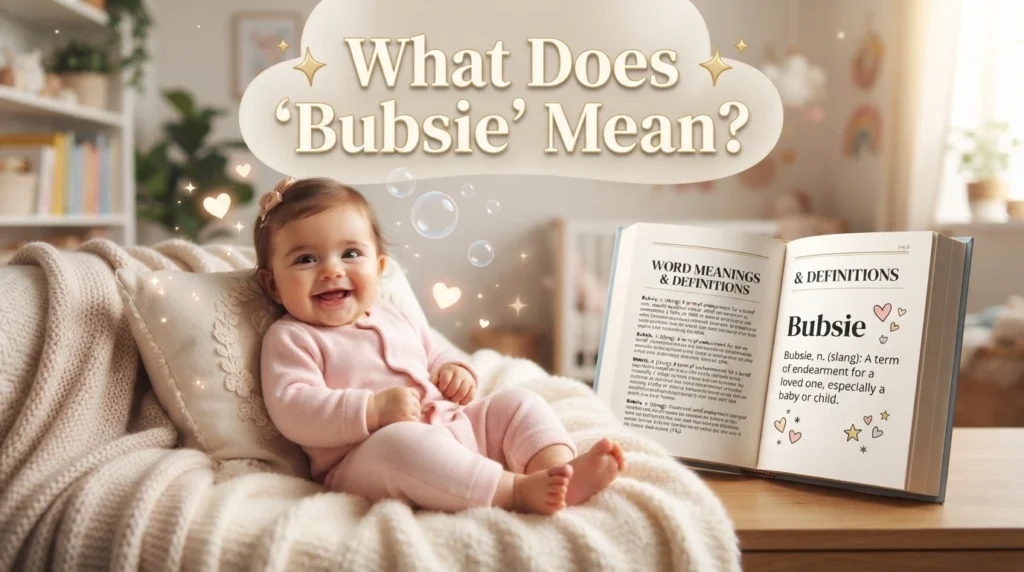
Bubsie is a cute, informal term of affection. It can be used as a nickname for a baby, child, romantic partner, close friend, pet, or another person someone feels warmly toward.
The exact meaning depends on context. In one conversation, “bubsie” may simply mean “sweetie” or “little one.” In another, it may be a personalized nickname with no exact dictionary equivalent.
Simple Examples
- “Come here, bubsie!”
- “My little bubsie is finally asleep.”
- “Good morning, bubsie. Did you sleep well?”
- “Look at my adorable bubsie!”
The word usually creates a warm, playful, affectionate, and informal feeling.
Bubsie Synonyms and Similar Affectionate Words
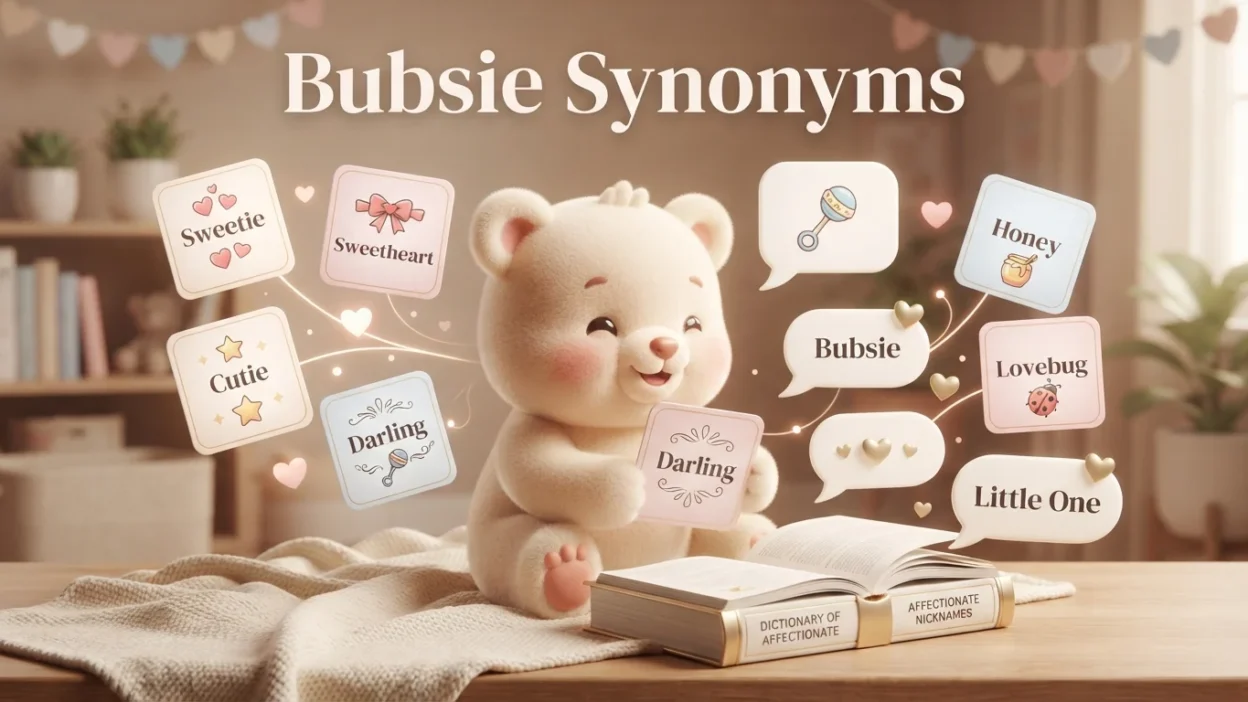
There is no single perfect synonym for “bubsie,” because the word is often used as a personal nickname. However, these alternatives can express similar feelings:
| Alternative | Meaning | Tone |
|---|---|---|
| Sweetie | A person you feel affection for | Warm |
| Sweetheart | Someone dear or loved | Affectionate |
| Cutie | Someone adorable | Playful |
| Darling | A beloved person | Tender |
| Honey | A loving form of address | Casual |
| Dear | Someone valued or loved | Gentle |
| Babe | A romantic or affectionate nickname | Informal |
| Baby | A common affectionate nickname | Loving |
| Little one | A young or cherished person | Tender |
| Lovey | Someone treated with affection | Cute |
| Pumpkin | A playful affectionate nickname | Whimsical |
| Sunshine | Someone who brings happiness | Warm |
| Angel | Someone viewed as especially sweet | Affectionate |
| Precious | Someone considered very special | Tender |
| Cuddlebug | Someone who loves cuddling | Playful |
| Snugglebug | A cute nickname for an affectionate person | Playful |
| Cutie pie | Someone extremely cute | Very playful |
| Sweet pea | A charming affectionate nickname | Gentle |
| Lovebug | Someone who is very lovable | Playful |
| Boo | An informal affectionate nickname | Casual |
Which Bubsie Alternative Should You Use?
For a romantic context, words such as babe, baby, sweetheart, and darling work well.
For a child or baby, little one, sweetie, cutie, and precious may sound more natural.
For a playful nickname, cuddlebug, snugglebug, pumpkin, and cutie pie create a more cheerful feeling.
For general affection, dear, honey, sweetheart, and sweetie are versatile choices.
What Does “Demure” Mean?
The adjective demure describes someone who behaves in a quiet, modest, reserved, or somewhat shy way.
A demure person may avoid drawing attention to themselves. The word is often associated with modesty, gentleness, quiet confidence, and restrained behavior.
Simple Definition
Demure = quiet, modest, reserved, and not seeking attention.
For example:
“She gave a demure smile when everyone complimented her.”
This suggests that she responded modestly and did not behave in an overly confident or attention-seeking way.
Tone and Usage of “Demure”
“Demure” can sound:
- Elegant
- Formal
- Gentle
- Modest
- Reserved
- Old-fashioned in some contexts
It is commonly used to describe a person’s behavior, expression, appearance, manner, or style.
30 Synonyms of Demure
Below are 30 useful alternatives for demure, with simple meanings, examples, and appropriate usage contexts.
1. Modest
Meaning: Not showing off or seeking too much attention.
Example:
“She wore a modest dress to the formal event.”
Best usage: Clothing, behavior, appearance, or attitude.
2. Reserved
Meaning: Quiet and unlikely to openly express feelings or opinions.
Example:
“He was reserved when meeting the new members of the team.”
Best usage: Personality and social behavior.
3. Shy
Meaning: Nervous or uncomfortable around other people or attention.
Example:
“The shy student quietly answered the teacher’s question.”
Best usage: People who feel uncomfortable in social situations.
4. Bashful
Meaning: Easily embarrassed, especially when receiving attention or praise.
Example:
“She became bashful when her friends complimented her.”
Best usage: Friendly, warm descriptions of someone who is easily embarrassed.
5. Unassuming
Meaning: Not trying to appear important, impressive, or special.
Example:
“Despite his success, he remained unassuming.”
Best usage: Personality and attitude.
6. Reticent
Meaning: Unwilling to speak openly about thoughts or feelings.
Example:
“She was reticent about discussing her personal life.”
Best usage: Formal writing and descriptions of communication.
7. Quiet
Meaning: Not loud, talkative, or attention-seeking.
Example:
“She was a quiet and thoughtful member of the group.”
Best usage: General descriptions of personality or behavior.
8. Soft-Spoken
Meaning: Speaking gently and without a loud or aggressive manner.
Example:
“The soft-spoken teacher created a peaceful classroom.”
Best usage: Voice, communication style, and personality.
9. Mild
Meaning: Gentle and not forceful or extreme.
Example:
“He had a mild and friendly personality.”
Best usage: Personality, behavior, and temperament.
10. Gentle
Meaning: Kind, calm, and not harsh or aggressive.
Example:
“She had a gentle manner when speaking with younger children.”
Best usage: Personality, actions, and communication.
11. Unobtrusive
Meaning: Not attracting unnecessary attention.
Example:
“The artist chose an unobtrusive style for the small exhibition.”
Best usage: Formal descriptions of behavior, design, or appearance.
12. Modest-Mannered
Meaning: Behaving in a humble and restrained way.
Example:
“The modest-mannered guest accepted the praise politely.”
Best usage: Formal or descriptive writing.
13. Meek
Meaning: Quiet, gentle, and unlikely to challenge others aggressively.
Example:
“The meek character rarely argued with anyone.”
Best usage: Personality descriptions, although it can sometimes suggest weakness.
14. Subdued
Meaning: Quiet, restrained, or less expressive than usual.
Example:
“She gave a subdued response to the unexpected compliment.”
Best usage: Emotions, reactions, behavior, and atmosphere.
15. Coy
Meaning: Shy or pretending to be shy, sometimes in a playful way.
Example:
“She gave a coy smile before answering the question.”
Best usage: Playful or flirtatious situations.
16. Demure-Looking
Meaning: Having a quiet, modest, or reserved appearance.
Example:
“She had a demure-looking style that suited the occasion.”
Best usage: Appearance and visual descriptions.
17. Dainty
Meaning: Small, delicate, and graceful.
Example:
“She wore a dainty necklace with a simple dress.”
Best usage: Physical appearance, clothing, objects, and style.
18. Refined
Meaning: Elegant, polished, and controlled in behavior or appearance.
Example:
“Her refined manner made a strong impression at the ceremony.”
Best usage: Formal descriptions of style and behavior.
19. Elegant
Meaning: Graceful, attractive, and tasteful.
Example:
“She had an elegant and understated appearance.”
Best usage: Clothing, appearance, manners, and style.
20. Graceful
Meaning: Moving or behaving in a smooth, attractive, and controlled way.
Example:
“Her graceful manner made everyone feel comfortable.”
Best usage: Movement, behavior, and social manner.
21. Restrained
Meaning: Controlled and not overly expressive.
Example:
“He maintained a restrained tone throughout the discussion.”
Best usage: Formal writing, emotions, behavior, and speech.
22. Unpretentious
Meaning: Simple and not designed to impress others.
Example:
“She had an unpretentious personality despite her achievements.”
Best usage: Personality, lifestyle, writing, and design.
23. Humble
Meaning: Not believing that you are better or more important than others.
Example:
“The humble winner thanked everyone who supported her.”
Best usage: Character and attitude.
24. Self-Effacing
Meaning: Avoiding praise or attention for yourself.
Example:
“His self-effacing humor made him easy to work with.”
Best usage: Personality and formal descriptions.
25. Timid
Meaning: Lacking confidence or feeling nervous about taking action.
Example:
“The timid child stayed close to her parents.”
Best usage: Personality and behavior, especially when fear is involved.
26. Unassertive
Meaning: Not forceful about expressing opinions or demanding what you want.
Example:
“She was polite but somewhat unassertive during the negotiation.”
Best usage: Workplace, communication, and personality descriptions.
27. Innocent
Meaning: Showing a lack of experience, harm, or bad intention.
Example:
“His innocent expression made everyone smile.”
Best usage: Expressions, personality, or behavior when innocence is relevant.
28. Sweet-Natured
Meaning: Naturally kind, gentle, and pleasant.
Example:
“The sweet-natured student was always willing to help classmates.”
Best usage: Friendly descriptions of personality.
29. Mild-Mannered
Meaning: Calm, gentle, and unlikely to become aggressive.
Example:
“He was a mild-mannered person who avoided unnecessary arguments.”
Best usage: Personality and everyday descriptions.
30. Soft
Meaning: Gentle, delicate, or lacking harshness in manner.
Example:
“She responded with a soft and modest smile.”
Best usage: Expressions, voice, manner, and emotional descriptions.
Demure Synonyms Comparison Table
| Synonym | Main Idea | Formality | Best Context |
|---|---|---|---|
| Modest | Not showing off | Medium | Appearance and behavior |
| Reserved | Not openly expressive | Medium | Personality |
| Shy | Uncomfortable with attention | Casual | Social behavior |
| Bashful | Easily embarrassed | Casual | Praise and attention |
| Unassuming | Not seeking importance | Medium | Personality |
| Reticent | Not willing to speak | High | Formal writing |
| Coy | Playfully shy | Medium | Flirting or teasing |
| Meek | Quiet and submissive | Medium | Character descriptions |
| Subdued | Restrained expression | Medium | Emotions and reactions |
| Refined | Polished and elegant | High | Style and manners |
| Restrained | Controlled expression | High | Formal writing |
| Humble | Not arrogant | Medium | Character and attitude |
| Timid | Nervous or lacking confidence | Medium | Personality |
| Gentle | Kind and calm | Medium | Behavior and manner |
| Unpretentious | Simple and natural | Medium | Personality and lifestyle |
Bubsie Synonyms vs. Demure Synonyms
It is useful to keep these two vocabulary groups separate.
Bubsie synonyms describe affectionate names or playful terms of address:
- Sweetie
- Sweetheart
- Darling
- Cutie
- Honey
- Babe
- Baby
- Lovebug
- Little one
- Cuddlebug
Demure synonyms describe modest, quiet, reserved, or restrained qualities:
- Modest
- Reserved
- Shy
- Bashful
- Unassuming
- Reticent
- Coy
- Subdued
- Restrained
- Unassertive
These words should not normally be substituted for one another because they communicate different ideas.
How to Choose the Right Synonym
Choosing a synonym is not only about finding a word with a similar dictionary definition. You should also consider tone, context, intensity, and the exact quality you want to describe.
For Modesty
Choose:
- Modest
- Unassuming
- Humble
- Unpretentious
Use these when the person does not show off or seek admiration.
Example:
“Although she won several awards, she remained humble.”

For Shyness
Choose:
- Shy
- Bashful
- Timid
- Reserved
These words work when someone is uncomfortable with attention or social interaction.
Example:
“The bashful child smiled and looked away.”
For Quiet Behavior
Choose:
- Quiet
- Subdued
- Mild
- Soft-spoken
These alternatives emphasize calm or low-key behavior.
Example:
“He was soft-spoken but very thoughtful.”
For Formal Writing
Choose:
- Reticent
- Restrained
- Unobtrusive
- Refined
- Self-effacing
These words can fit academic, professional, literary, or polished writing.
Example:
“She maintained a restrained response during the interview.”
For Elegant Appearance
Choose:
- Dainty
- Elegant
- Refined
- Graceful
- Demure
These words work especially well when describing clothing, appearance, movement, or style.
Example:
“She chose an elegant and understated dress for the ceremony.”
For Playful Shyness
Choose:
- Coy
- Bashful
- Demure
These can work when someone appears shy or reserved in a playful or teasing context.
Example:
“She gave him a coy smile before turning away.”
Common Mistakes When Using Demure Synonyms
Mistake 1: Treating “shy” and “demure” as exact equivalents
They overlap, but they are not identical.
Shy often suggests nervousness or discomfort.
Demure more strongly suggests modesty, restraint, or reserved behavior.
Mistake 2: Using “meek” as a positive synonym every time
“Meek” can suggest gentleness, but it may also imply passiveness or a lack of assertiveness.
Mistake 3: Using “timid” when you only mean modest
Someone can be modest and confident. Timid usually suggests a lack of confidence or courage.
Mistake 4: Using “coy” in formal situations
“Coy” can have a playful or flirtatious meaning, so it is not always appropriate in professional or academic writing.
Frequently Asked Questions
Is “bubsie” a synonym for “baby”?
Not exactly, but the words can be used similarly as affectionate nicknames. “Bubsie” is a playful, informal term that can refer to a baby or another cherished person.
What are the cutest synonyms for bubsie?
Some cute alternatives include cutie, sweetie, little one, lovebug, cuddlebug, snugglebug, pumpkin, sweet pea, and cutie pie.
Is “bubsie” formal English?
No. “Bubsie” is informal and affectionate. It is better suited to personal conversations, messages, social media, or playful writing than formal academic writing.
What is the simplest synonym for demure?
Depending on context, modest, reserved, or shy may be the simplest alternatives.
Is “demure” positive or negative?
“Demure” is generally neutral to positive when describing modest, elegant, or reserved behavior. However, its meaning can depend on context and the writer’s intention.
What is the difference between demure and modest?
Modest often focuses on avoiding excessive attention, pride, or revealing appearance. Demure emphasizes quiet, reserved, restrained, or modest behavior and appearance.
Final Thoughts on Bubsie Synonyms
Bubsie is a warm and playful affectionate term rather than a formal vocabulary word with one exact synonym. Depending on your situation, alternatives such as sweetie, sweetheart, darling, cutie, baby, little one, or lovebug can express similar affection.
At the same time, demure belongs to a completely different vocabulary group. It describes someone who is modest, quiet, reserved, shy, restrained, or understated. Choosing between words such as modest, reserved, bashful, coy, and unassuming depends on the exact meaning and tone you want.
For students, ESL learners, writers, and content creators, understanding these small differences can make vocabulary more accurate, natural, and expressive. The best synonym is not simply the word with the closest dictionary definition—it is the word that fits your context, audience, tone, and intended meaning.

David Henry is a language enthusiast and content writer specializing in synonyms, vocabulary, and word meanings. He creates clear, engaging resources that help readers improve their writing, communication, and English skills.